Multi-Channel Selling Without Losing Your Margin: Navigating Marketplace Fees, Ad Spend and Direct-to-Consumer Customer Acquisition in the Early Stages
By Kaushal Patel12 min read
Selling everywhere sounds like the obvious way to grow: list on the big marketplaces, run ads, open your own website, maybe sell wholesale too. More channels, more orders. But early-stage brands often discover something painful a few months in: revenue went up and profit went down.
Each channel takes its own cut. Marketplaces charge commissions and fees. Ads charge for every click. Your own website needs traffic you have to buy. Wholesale buyers want a discount. Stack them together without a plan, and a product that looked profitable at ₹1,000 quietly earns you ₹100, or nothing at all.
This guide is about selling in many places without giving your margin away: knowing your true profit per order in every channel, giving each channel a clear job, and moving customers to where you keep the most.
Where the money actually goes
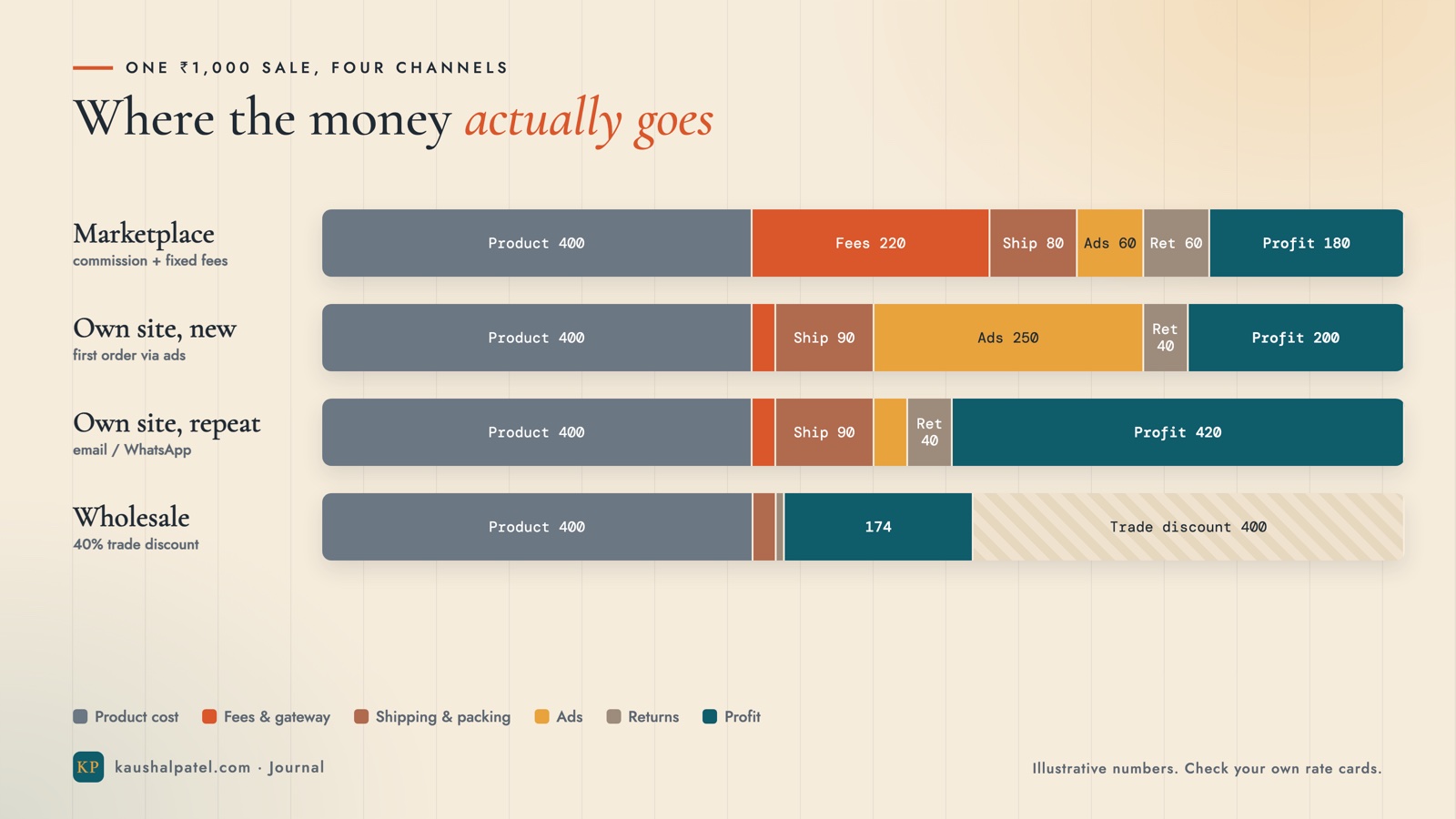
Take one product with a ₹1,000 price and ₹400 product cost. On paper, that’s a 60% gross margin. Here’s what it can look like after each channel takes its share:
Illustrative numbers. The same ₹1,000 product earns very different profit depending on where and how it sells.
Three things stand out. Marketplace fees can take more than the ads do. A new customer from ads on your own site is barely more profitable than a marketplace sale. And a repeat customer on your own site is worth more than twice as much as either. That last bar is the whole strategy.
Every channel, honestly compared
What you pay
What you get
Customer data
Best used for
Marketplaces
Commission, fixed and shipping fees, in-platform ads
Buyers already searching, trust, logistics
Very little
Discovery and early demand
Own website
Payment gateway, shipping, the cost of bringing traffic
Full price control, bundles, your brand
Yours: email, phone, order history
Repeat orders and loyalty
Social and WhatsApp
Time, content, sometimes ads
Direct conversations, trust
Partly yours
Launches, restocks, close relationships
Paid ads
Every click or view
Speed and reach on demand
Depends where they land
Accelerating proven products
Wholesale and B2B
Trade discount, credit terms
Volume, fewer and larger orders
The buyer, not end customers
Steady volume and cash flow
The hidden costs of marketplaces
Marketplace commission is the number everyone looks at, but it’s rarely the only fee. Before you price a product, go through the current rate card for your category and add up everything that applies:
Cost
What it is
Watch out for
Commission / referral fee
A percentage of the selling price
Rates differ by category and price band
Fixed or closing fee
A flat amount per order
Hurts cheap products the most
Shipping and weight fees
Charged by weight, size and distance
Packaging that adds weight or volume
Payment or collection fee
For handling the payment, including cash on delivery
Often hidden inside “fees”
Storage and fulfilment
If the marketplace stores and ships your stock
Slow-moving stock that sits for months
Returns and reverse shipping
Return pickup, damaged or unsellable items
High-return categories like apparel and footwear
In-platform ads
Sponsored listings to stay visible
Ads that become “compulsory” to keep rank
Tax on fees
In India, GST is charged on marketplace fees too
Forgetting it in your margin calculation
Interactive · Channel margin calculator
What do you really make per order?
Enter your price and product cost, then adjust each channel. All amounts are per order, and the percentages are of the selling price.
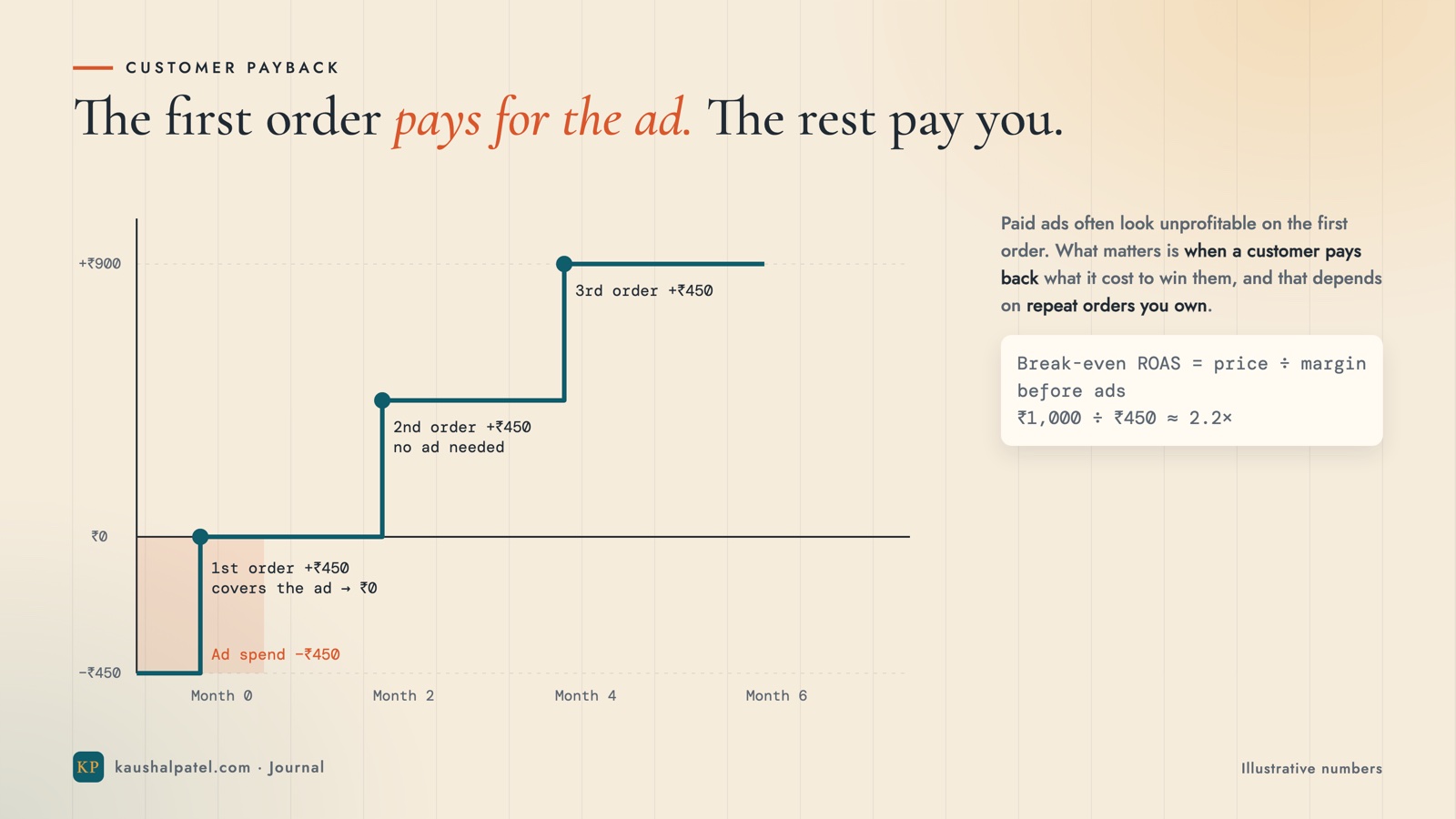
Break-even ROAS is the return on ad spend at which ads stop losing money: selling price ÷ profit before ads. If your ads report a ROAS below it, every sale they bring loses money, however good the revenue looks.
Give every channel a job
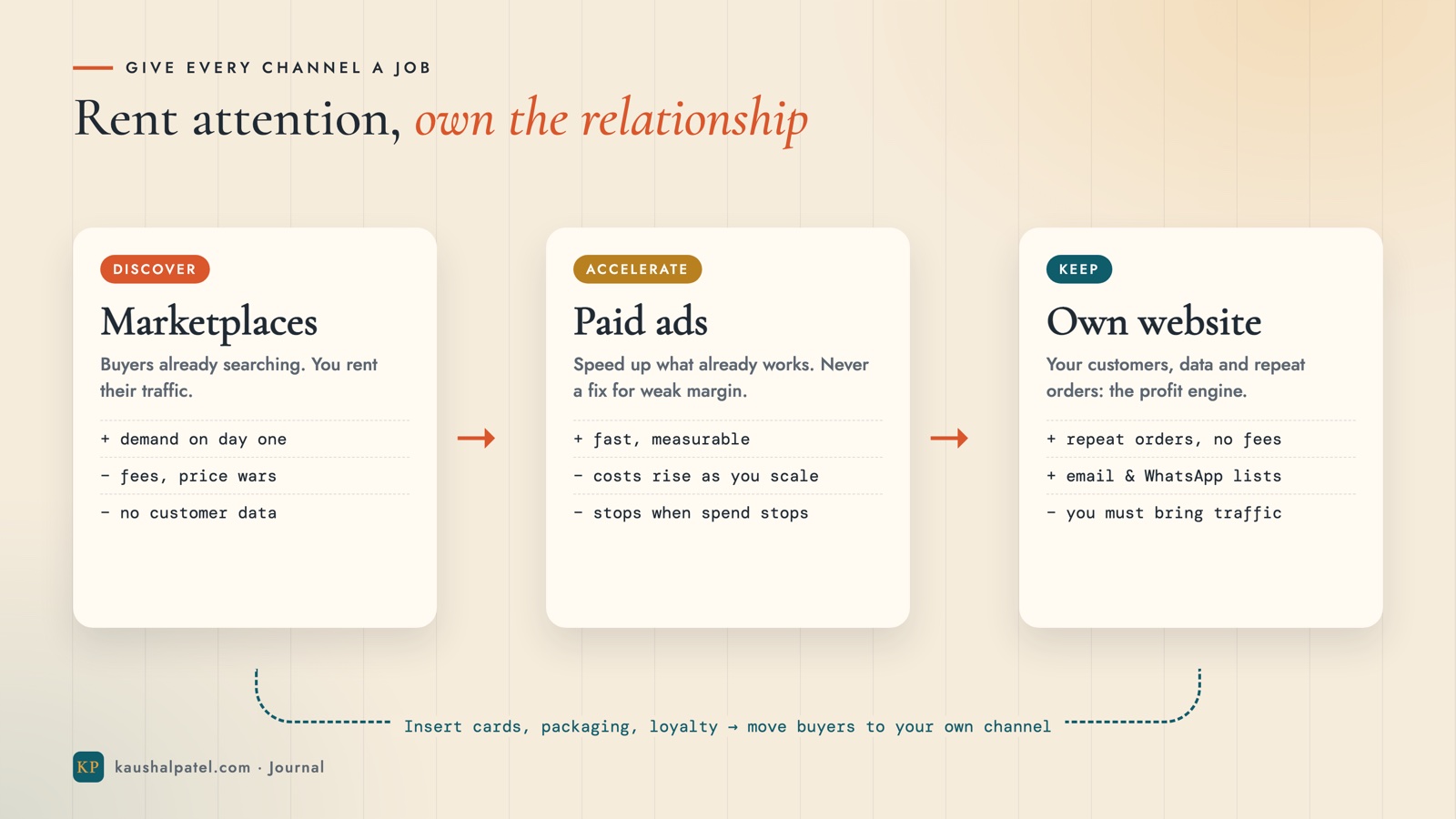
The biggest mistake isn’t being on too many channels. It’s expecting every channel to do everything. Each one is good at something different:
Rent attention on marketplaces and ads; own the relationship on your website.
Marketplaces: discover
Marketplaces are the fastest way to reach buyers who are already searching. Treat the fees as the price of discovery and trust. Keep your catalogue focused on products that still make money there, and don’t list items that only work at a big discount.
Paid ads: accelerate
Ads make a working product sell faster. They don’t fix a weak margin. They make it worse at scale, because ad costs usually rise as you reach colder audiences. Set a fixed monthly test budget, measure profit per order rather than ROAS alone, and stop campaigns that sit below break-even.
Your own website: keep
Your website is where you own the customer: their email, phone number and order history. It’s where repeat orders happen without commissions, where bundles raise the order value, and where WhatsApp and email bring buyers back for almost nothing. That’s why the repeat-order bar above is so much longer.
Wholesale: steady volume
Wholesale earns less per unit but sells in bulk, with little marketing cost. It suits brands with production capacity and steady cash-flow needs. Set minimum order quantities and a separate trade price list, so wholesale buyers never undercut your retail channels.
Quick game · Find the leak
Where is this brand losing money?
Four early-stage brands, four problems. Spot the leak, then open the card.
Revenue doubled after a big marketplace sale, but the bank balance didn’t move.
Discount plus fees. A 30% sale discount plus commission, fixed fees and returns can push the profit per order below zero. Every extra sale lost money.
Ads show a 3× ROAS, so the founder keeps raising the budget.
ROAS below break-even. If profit before ads is ₹240 on a ₹1,000 sale, break-even ROAS is about 4.2×. At 3×, every sale from those ads loses money.
A fast-selling ₹299 product has the highest sales of the whole range.
Fixed fees on a cheap product. Flat per-order fees and shipping take a much bigger share of a low-priced item. Bundle it, raise the price, or sell it only on your own site.
The same stock is listed on two marketplaces and the website, and cancellations keep rising.
Inventory out of sync. Overselling leads to cancellations, penalties and lost ranking. Multi-channel selling needs one source of truth for stock.
The payback rule for paid acquisition
On your own website, the first order from an ad is often break-even at best. That’s fine, if the customer comes back. What matters is how long it takes for a customer to pay back the ad that brought them in.
Illustrative payback: the first order covers the ad, and every repeat order is profit.
Marketplace customers belong to the marketplace, but they still open your parcel. Good brands use every touchpoint to build a direct relationship, within each marketplace’s rules:
Insert cards with care tips, a QR code to register for warranty or get the size guide, and a reason to visit your site.
Website-only bundles and sizes, so your own site offers something the marketplace doesn’t, instead of just being cheaper.
WhatsApp and email updates for restocks, new launches and early access. This is the cheapest repeat-order channel there is.
A simple loyalty reward for second and third orders on your site.
Great packaging and support, because people come back to brands they remember.
Price consistently, not identically
Customers compare prices across channels in seconds. Undercutting your own marketplace listings damages trust and can break marketplace rules; matching them exactly ignores very different costs. A practical middle ground:
Keep the same list price for the same item everywhere.
Use channel-specific offers: bundles, larger packs or exclusive colours on your own site, and smaller packs on marketplaces.
Give wholesale buyers a separate trade price list with minimum order quantities and a resale price you agree on.
Run discounts where your margin can afford them, which is usually your own site.
Operations: the part nobody posts about
Multi-channel selling breaks on operations long before it breaks on marketing. Stock listed in three places can be sold three times. Orders arrive in different dashboards. Returns come back through different couriers. You need:
One inventory source of truth that updates every channel automatically.
One order view, so packing and dispatch don’t depend on checking five apps.
Per-channel profit reports, not just total revenue.
This is the kind of system I like building. The Mahavir Fashion B2B portal, for example, gives a wholesale business its own ordering channel with buyer accounts, invoices and dispatch tracking, instead of running everything through phone calls and WhatsApp. (More on why this kind of “boring” software matters: The “Boring” Startup Advantage.)
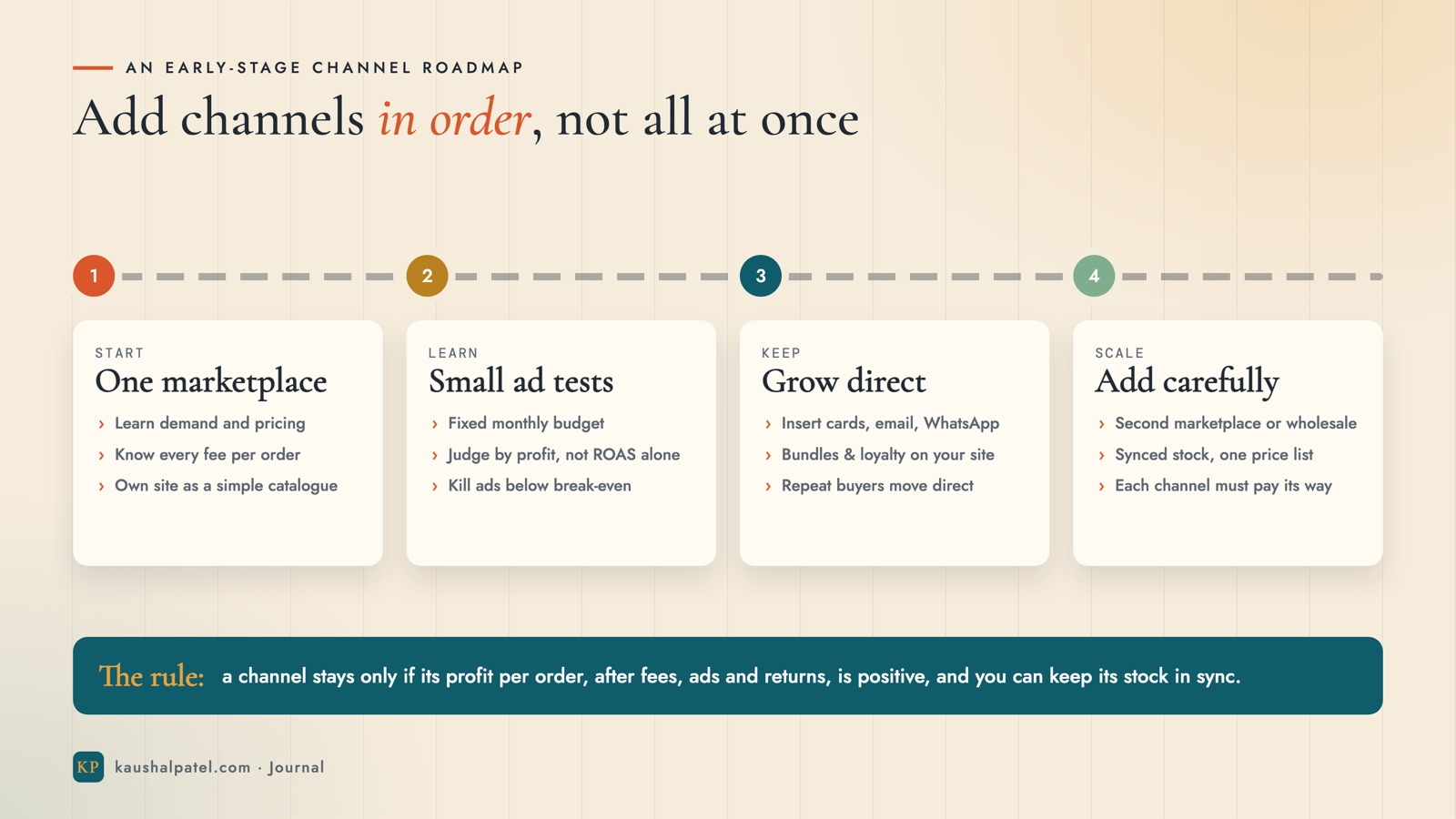
An early-stage channel roadmap
Add channels in order, not all at once.
Start with one marketplace where your buyers already shop. Learn your real fees, return rates and which products sell. Keep a simple website as your catalogue and brand home.
Test ads with a fixed budget. Work out break-even ROAS before you spend anything, and judge campaigns by profit per order.
Grow your direct channel. Insert cards, WhatsApp, email and website-only bundles turn one-time buyers into repeat customers.
Add channels carefully. A second marketplace, quick commerce or wholesale, each only once stock is synced and each channel shows positive profit per order.
Interactive · Channel check
Should you add this channel?
Think of one specific channel you’re considering. Each answer scores 0–3.
Not now. This channel would add revenue but probably cost you margin and focus.
Test it small: a few products, a fixed budget and a 60-day review of profit per order.
Worth adding. Fix any weak spots, such as stock sync or pricing, before you scale it.
Add it. It brings new customers at a healthy margin, so it should pay its way.
0/18
Answer all six questions to check the channel.
Before you add another channel, check
You know your profit per order in every current channel, after fees, ads and returns.
You’ve worked out break-even ROAS before spending on ads.
Your stock updates every channel automatically.
Your own website captures customer contacts and brings buyers back.
Prices are consistent across channels, with channel-specific offers rather than undercutting.
Frequently asked questions
Should a new brand start on marketplaces or its own website?
Usually both, with different jobs. A marketplace brings early demand; a simple website builds your brand and captures repeat customers. Put most of your early effort where buyers already are, which is usually the marketplace.
What’s a “good” ROAS?
There isn’t a universal number. It depends on your margin. Work out your break-even ROAS (price ÷ profit before ads). Anything above it is profitable on the first order, and a bit below can still work if customers reliably come back.
Can I sell cheaper on my own website than on marketplaces?
You can offer better value, such as bundles, exclusive products or loyalty rewards, but openly undercutting the same item can break marketplace pricing rules and confuse customers. Check each marketplace’s current policy.
When should I add wholesale?
When you have the production capacity and margin to sell at a trade discount, and a clear trade price list and minimum order. Wholesale works best as a steady-volume channel alongside retail, not as a way to clear stock cheaply.
The bottom line
More channels don’t automatically mean more profit. Know your true margin per order everywhere you sell, give each channel one clear job, and keep pulling customers towards the channel you own. Grow with the channels that pay their way, and drop the ones that only add revenue.
Selling across marketplaces, your website and wholesale, and struggling to keep stock, orders and margins in one place? Let’s talk. I build the systems that make multi-channel selling manageable.
Quiet, written building in public: share architecture decisions, mistakes and real numbers to attract early adopters and talent, with an update builder.
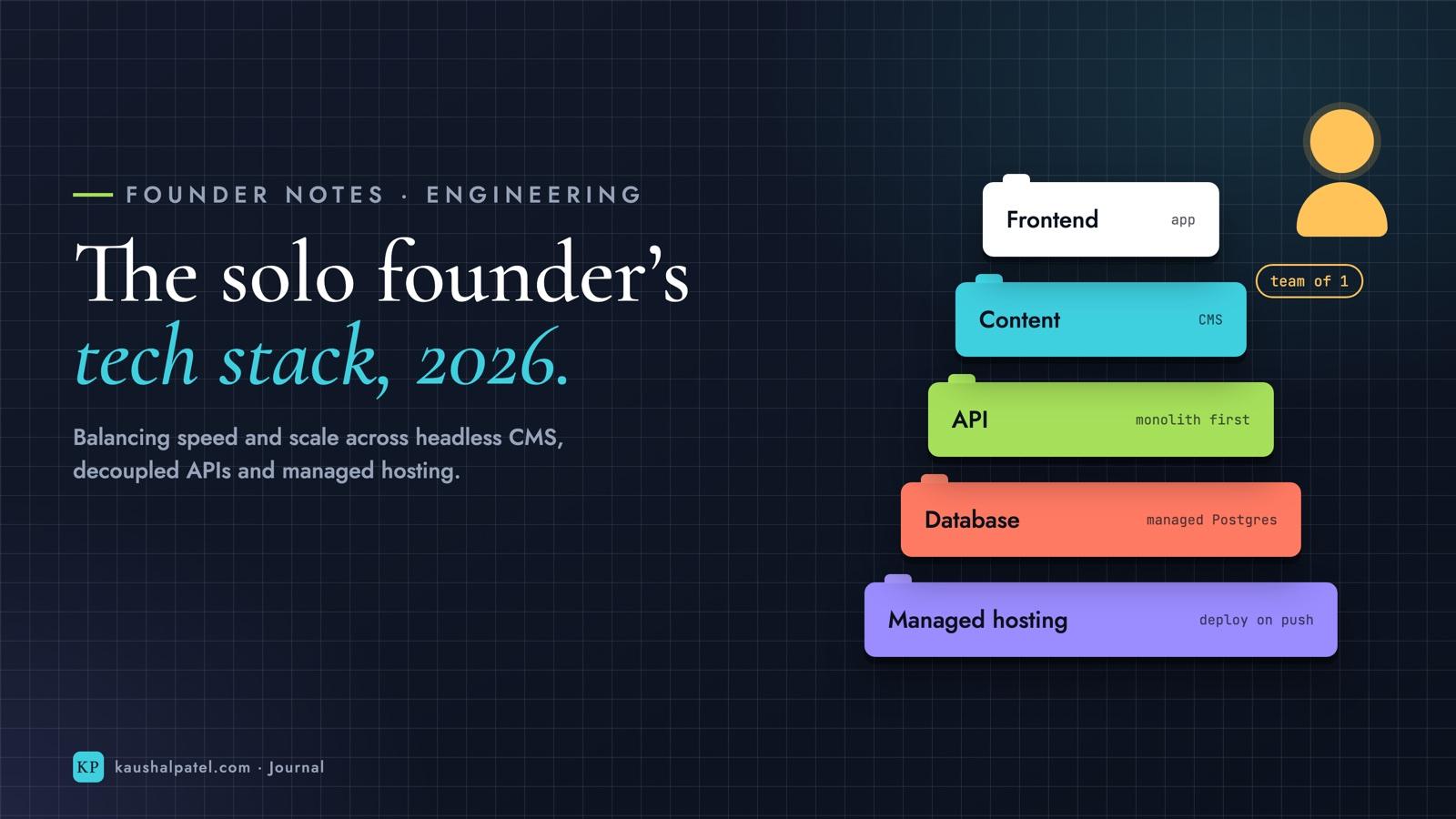
Headless CMS, decoupled APIs or a monolith, managed hosting or a VPS: how to pick a 2026 stack one person can run, with a hosting cost calculator and checklist.
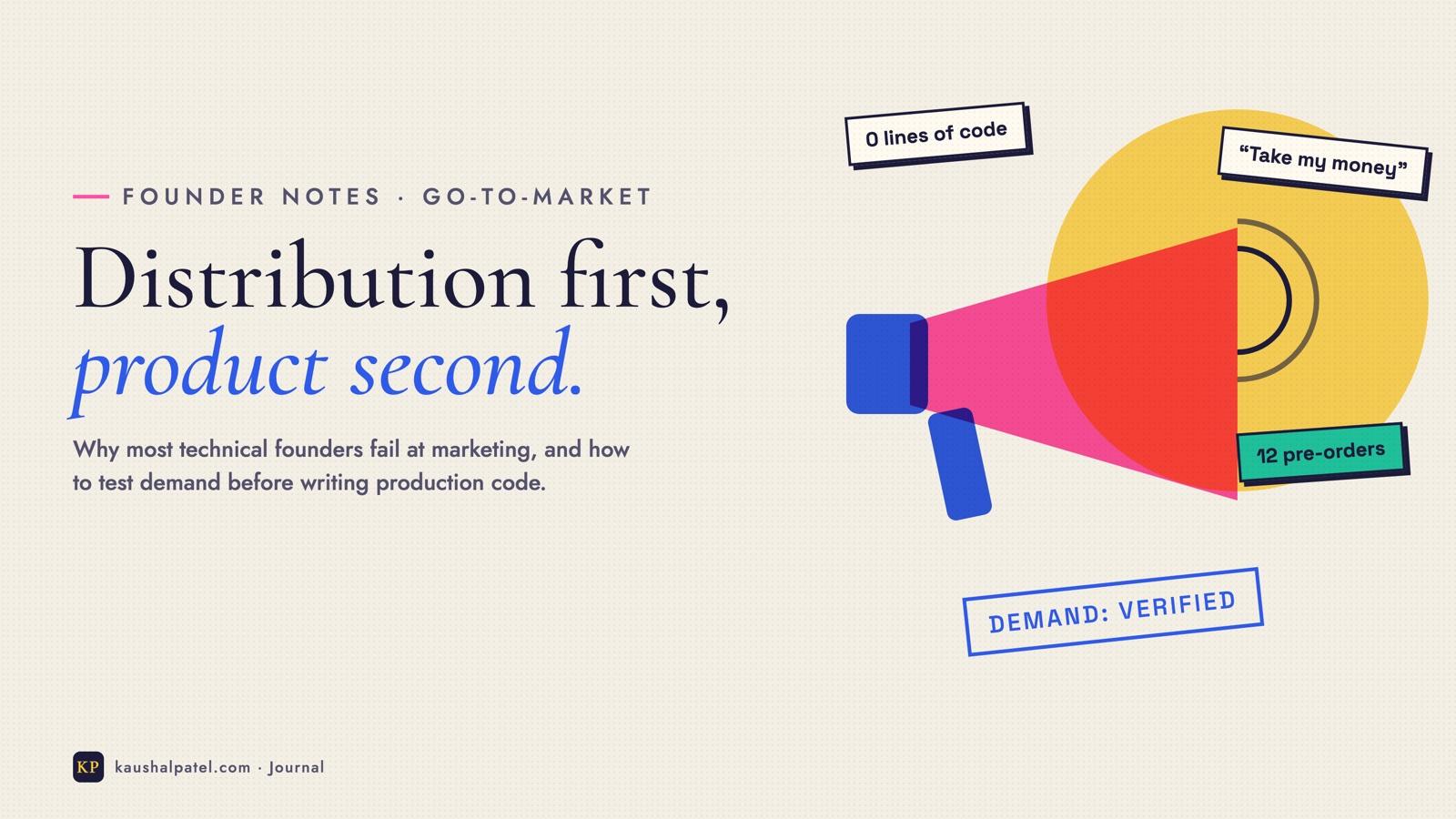
Why technical founders struggle with marketing, and how to prove demand before writing production code: a signal ladder, funnel calculator and 30-day sprint.