How Artificial Intelligence Is Changing the Future of Technology
By Kaushal Patel11 min read
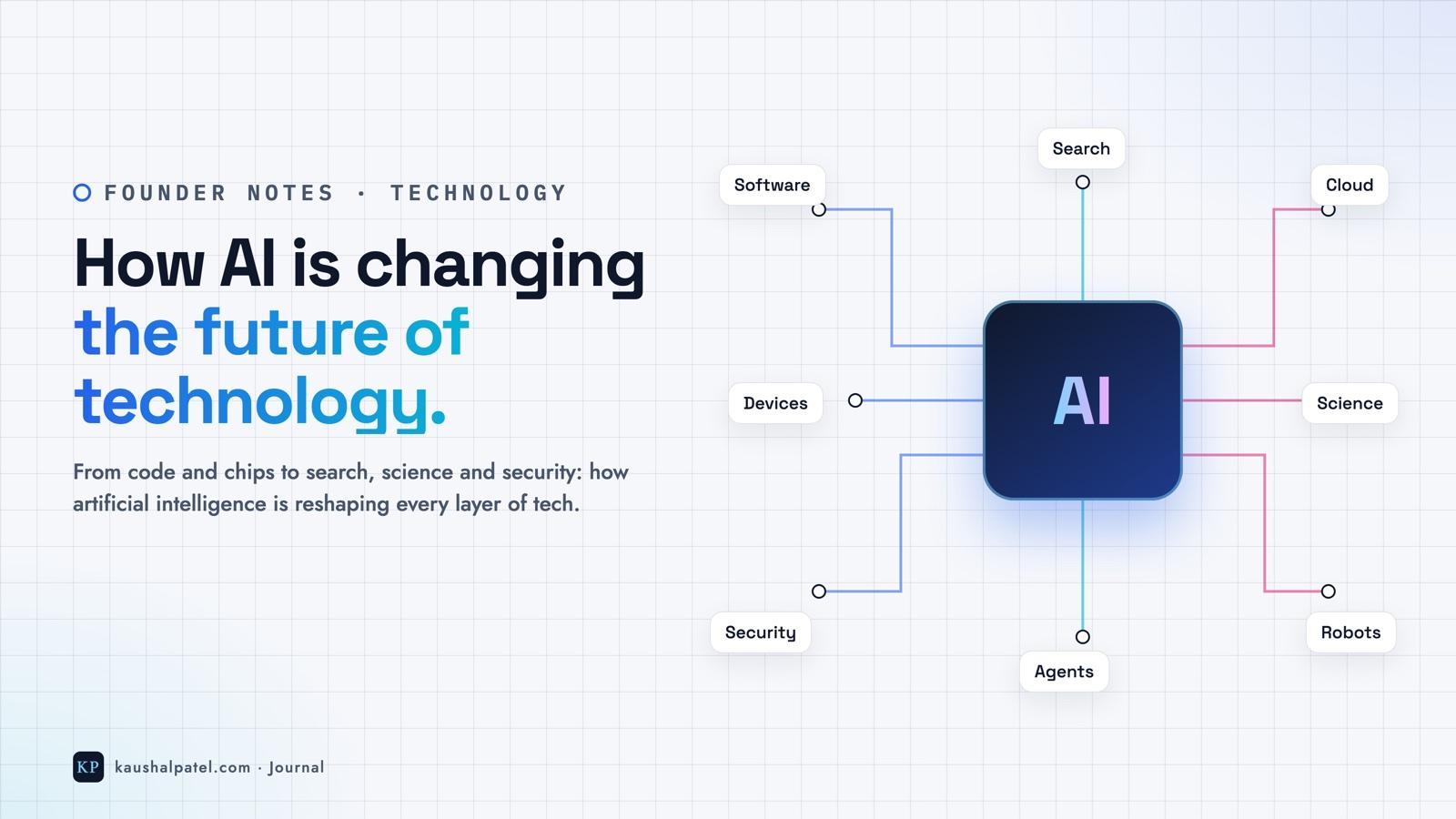
Artificial intelligence is no longer a single technology you can point to. It’s becoming a layer inside almost everything: the code developers write, the phones in our pockets, the way we search for information, how scientists discover medicines and how businesses run day to day. Understanding how AI is changing technology is now essential for anyone who builds, buys or uses software.
This guide explains the future of artificial intelligence in practical terms: how we got here, eight areas of technology AI is rebuilding right now, the AI trends to watch, the risks to manage, and what it all means for your career and your business.
A short history of artificial intelligence
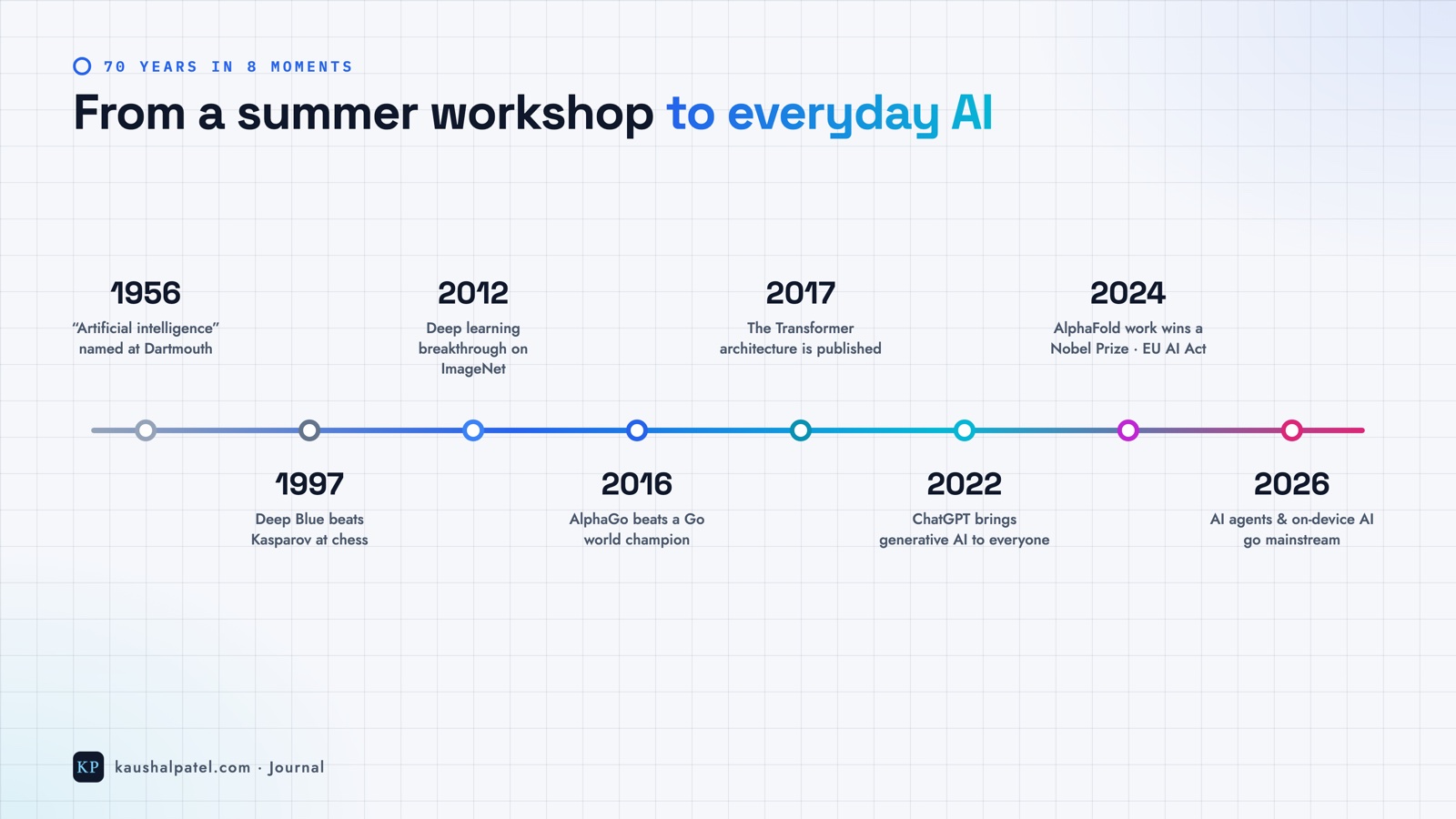
AI feels sudden, but it’s the result of seventy years of research, with long quiet periods and a few breakthrough moments:
From a 1956 summer workshop to AI in everyday tools.
Year
Milestone
Why it mattered
1956
The Dartmouth workshop names the field “artificial intelligence”
AI becomes a research discipline
1997
IBM’s Deep Blue beats world chess champion Garry Kasparov
Computers can beat humans at narrow, complex tasks
2012
A deep neural network wins the ImageNet image-recognition challenge by a wide margin
Deep learning takes off, powered by GPUs and big data
2016
DeepMind’s AlphaGo beats Go champion Lee Sedol
AI masters a game long thought too intuitive for machines
2017
Google researchers publish the Transformer architecture (“Attention Is All You Need”)
The foundation of today’s large language models
2022
OpenAI releases ChatGPT
Generative AI reaches hundreds of millions of people
2024
Nobel Prizes recognise neural-network research (Physics) and AlphaFold’s protein-structure work (Chemistry); the EU AI Act enters into force
AI becomes both a scientific tool and a regulated technology
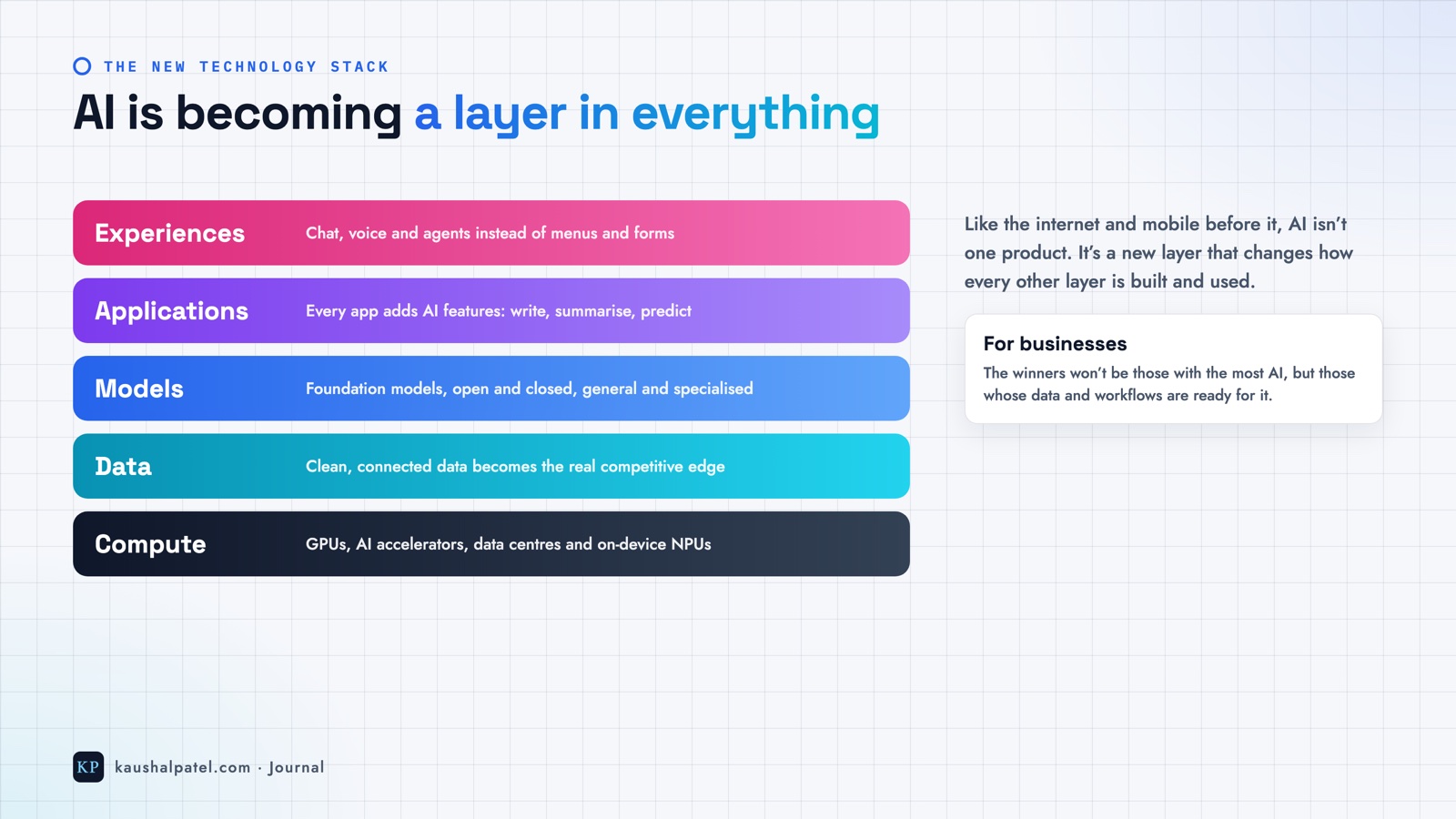
AI is becoming a layer in every technology
Like the internet and mobile, AI is a new layer that changes every other layer.
Think of modern technology as a stack. At the bottom is compute: chips and data centres. Above it sits data, then AI models, then the applications we use, and finally the experience of using them. AI is changing every one of these layers at once, which is why its impact feels so broad.
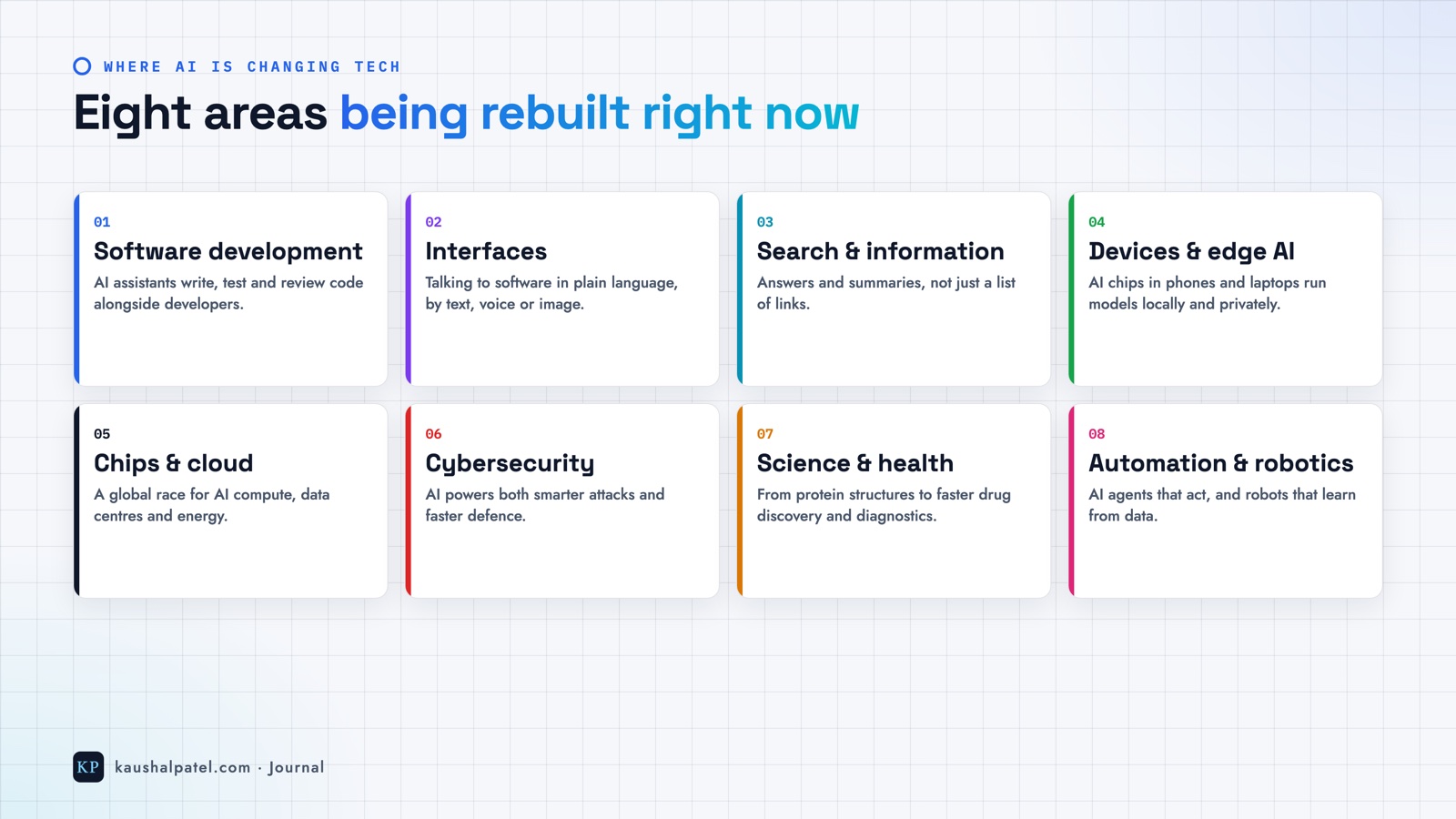
8 ways AI is changing the future of technology
Eight areas being rebuilt right now.
1. Software development: AI writes code alongside developers
AI in software development is one of the fastest-moving changes. AI coding assistants suggest code, write tests, explain unfamiliar codebases and review pull requests, and newer coding agents can plan and edit changes across many files. Developers spend less time on boilerplate and more on design, review and the problems that matter. The skill that grows in value is knowing what to build and checking that the AI built it correctly.
2. Interfaces: talking to software in plain language
For decades we learned the computer’s language: menus, forms and commands. Now computers are learning ours. You can ask software for what you want in text or voice, show it a photo or a screenshot, and get a result. Natural-language interfaces make powerful tools usable by people who never learned the menus, from spreadsheets to design apps.
3. Search and information: answers, not just links
Search is shifting from a list of links to AI-generated answers and summaries with sources. That saves time, but it also changes how websites get traffic and makes checking sources more important than ever. For businesses, being clearly understood by AI systems, with structured, accurate content, is becoming part of SEO.
4. Devices and edge AI: smarter, more private hardware
New phones and laptops include dedicated AI chips (NPUs) that run models directly on the device. Edge AI means faster responses, features that work offline and more privacy, because your data doesn’t always have to leave the device. Expect cameras, keyboards, assistants and accessibility features to keep getting smarter locally.
5. Chips, cloud and data centres: the race for compute
Training and running large AI models needs enormous computing power. That has made AI accelerators (like GPUs) some of the most sought-after technology in the world and is driving a wave of new data centres and investment in energy supply. Making AI cheaper and more efficient, with smaller models, better chips and smarter software, is one of the most important technology challenges of the decade.
6. Cybersecurity: AI on both sides
AI helps defenders spot unusual behaviour, triage alerts and fix vulnerabilities faster. It also helps attackers write convincing phishing messages, create deepfakes and probe systems at scale. Security teams increasingly use AI to fight AI, while basics like multi-factor authentication, patching and staff awareness matter more than ever.
7. Science and healthcare: faster discovery
AI is accelerating science itself. DeepMind’s AlphaFold predicted the 3D structures of over 200 million proteins, a breakthrough that contributed to the 2024 Nobel Prize in Chemistry. AI is also helping with drug discovery, medical imaging, weather forecasting and materials research. In healthcare, it supports (not replaces) clinicians with faster analysis and fewer administrative tasks.
8. Automation, AI agents and robotics
The next step after generative AI chatbots is AI agents: systems that can plan a task, use tools such as browsers, apps and code, and take actions to finish it. In the physical world, robots are learning from data instead of being programmed for every movement. Both raise the same principle: humans set goals, AI does the steps, and humans check the results.
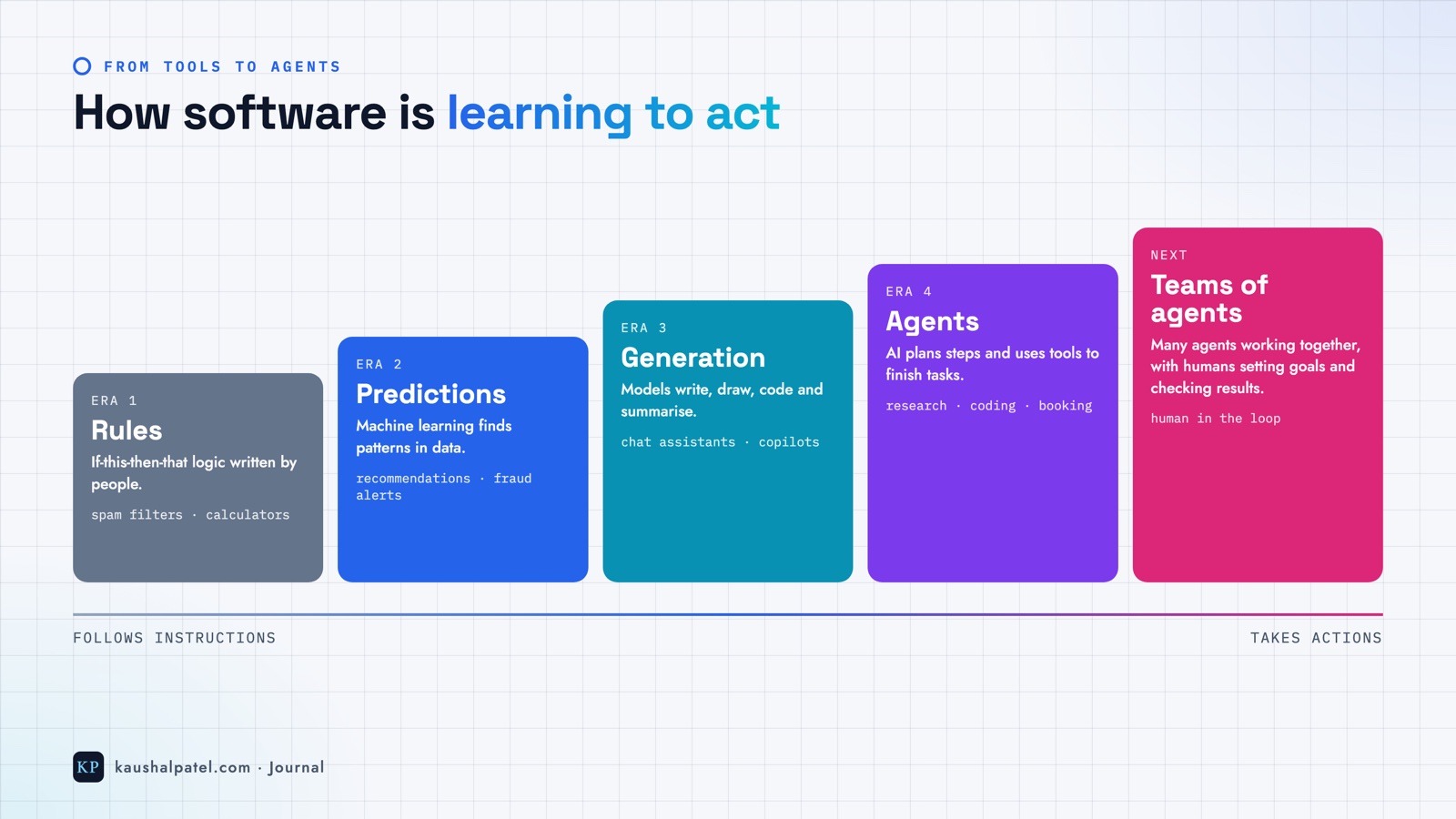
From tools to agents: how software is learning to act
Software is moving from following instructions to taking actions.
Technology area
Before AI
With AI
What to watch
Software development
Write every line by hand
AI suggests, tests and reviews code
Code quality and security review
User interfaces
Menus, forms, commands
Ask in plain language or voice
Accuracy and clear limits
Search
Ten blue links
Summarised answers with sources
Source quality, traffic to websites
Devices
Cloud does the thinking
On-device AI chips
Battery life, privacy
Customer service
Scripts and long waits
AI handles routine questions instantly
Easy hand-off to a human
Data analysis
Specialists and dashboards
Ask questions of your data directly
Clean, well-structured data
Workflows
Manual steps between apps
AI agents complete multi-step tasks
Permissions and oversight
The impact of AI on industries
Industry
How AI is being used
Healthcare
Medical imaging support, clinical note-taking, drug discovery
Personal tutoring, feedback on writing, lesson preparation
Textiles & trade
Design and print generation, catalogue writing, order and stock forecasting
Quick game · Myth or fact?
What’s true about AI?
Six common beliefs about artificial intelligence. Decide, then tap to check.
“AI understands the world the way humans do.”
Myth. Today’s AI models learn patterns from huge amounts of data. They can be remarkably capable, but they don’t experience or understand the world like people do, which is why they can be confidently wrong.
“AI can make up facts that sound true.”
Fact. These “hallucinations” are a known limitation. Always check important facts, numbers and quotes, especially in legal, medical and financial work.
“AI will replace every job.”
Myth, mostly. AI is changing tasks within jobs far more than it is removing whole jobs. Some roles will shrink and new ones will appear. People who learn to work with AI tend to be the most in demand.
“You need a huge dataset to benefit from AI.”
Myth. Most businesses use existing AI models through apps and APIs. What you need is clean, organised data about your business so AI can work with it.
“Running AI uses a lot of energy.”
Fact. Training and running large models needs significant computing power and electricity, which is why efficiency, smaller models and cleaner energy are major priorities.
“AI is only for big tech companies.”
Myth. Small businesses and individuals now use the same AI assistants as large companies, often for little or no cost.
Risks and challenges of AI
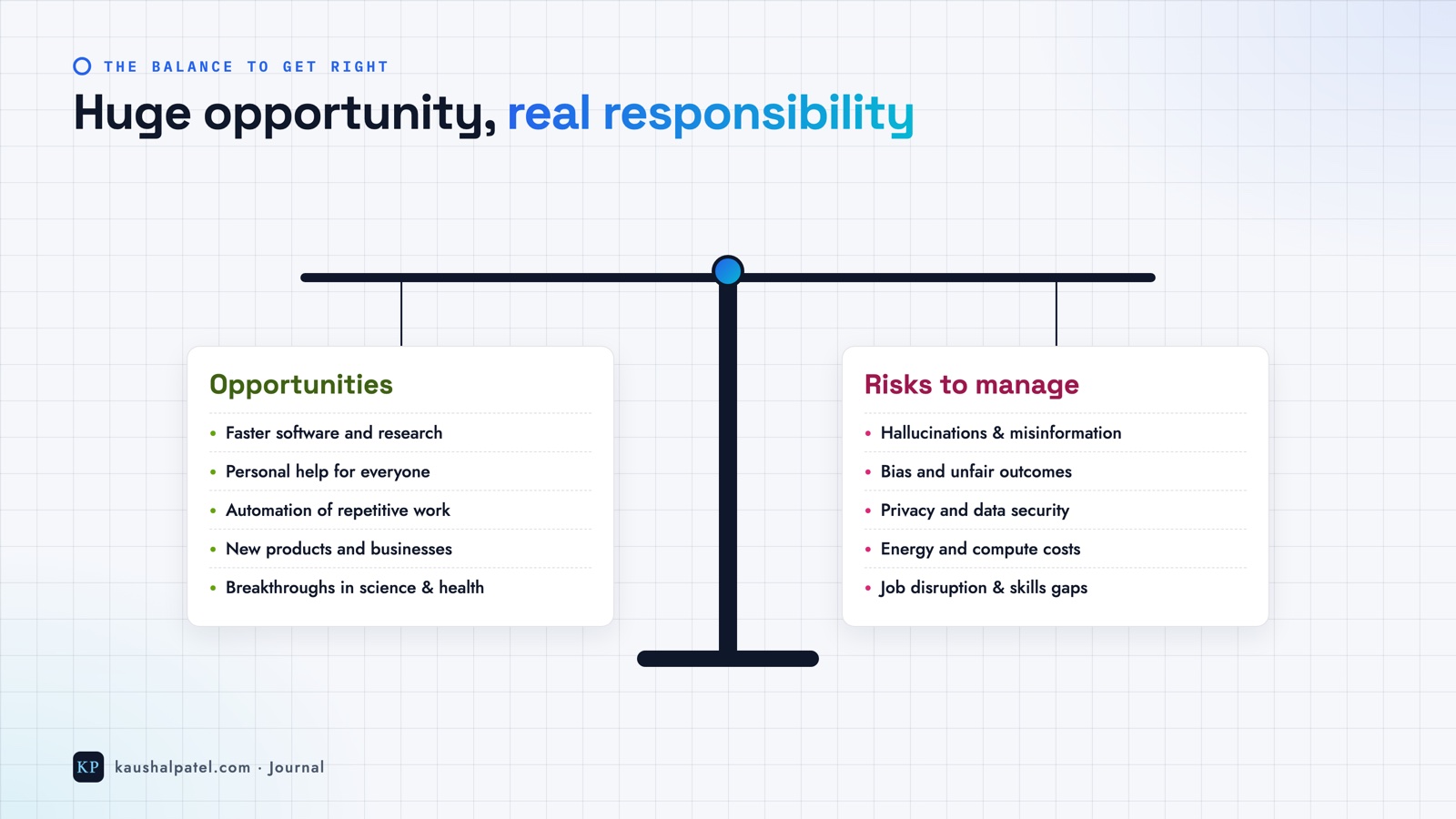
Huge opportunity, real responsibility.
The future of AI depends on getting the balance right. The main challenges:
Accuracy and misinformation: AI can produce convincing but wrong answers, and deepfakes make false content easier to create.
Bias: models learn from human data and can repeat unfair patterns in hiring, lending or policing if no one checks.
Privacy and security: sensitive data must be handled carefully, and AI systems themselves can be attacked or misused.
Energy and cost: the compute behind AI has real environmental and financial costs.
Jobs and skills: work is changing quickly, and people need time and support to adapt.
Regulation: laws like the EU AI Act set rules based on risk, and other countries are developing their own approaches.
AI trends to watch in the next five years
Predictions in AI age quickly, but these AI trends are already well underway and likely to define the next few years:
AI agents at work: assistants that complete multi-step tasks such as research, scheduling, reporting and coding, under human supervision.
Multimodal generative AI: models that understand and create text, images, audio and video fluidly.
Smaller, efficient models: capable AI that runs cheaply, privately and on-device.
AI in every app: AI features becoming a standard expectation, like search or spell-check.
Industry-specific AI: tools trained and tuned for healthcare, law, finance, manufacturing and trade.
Trust and governance: clearer rules, audits, watermarking and responsible-AI practices.
AI for science: faster discovery in medicine, materials, climate and energy.
Skills that matter in the AI era
Skill
Why it matters more with AI
Clear thinking and communication
Good prompts, briefs and reviews start with clear thinking
Judgement and fact-checking
Someone has to decide whether the output is right
Domain expertise
AI is most valuable in the hands of people who know the field
Data literacy
Understanding data quality, privacy and what numbers really mean
Working with AI tools
Knowing which tool to use, and how, multiplies your output
Ethics and responsibility
Spotting bias, protecting privacy and knowing when not to automate
What this means for businesses
For most businesses, the opportunity isn’t building AI models. It’s applying existing AI to real work. In my experience building software for businesses, the companies that benefit most share a few habits:
They start with a real problem, not with “we need AI”. AI works best inside a workflow customers already pay for (see The “Boring” Startup Advantage).
AI is becoming a layer inside almost every technology. It changes how software is built (AI-assisted coding), how we use it (natural language and voice), what it can do (AI agents that take actions), and where it runs (from cloud data centres to on-device AI chips).
What is the future of artificial intelligence?
The near future of AI points to AI agents that complete multi-step tasks, multimodal models that work across text, images, audio and video, smaller and more efficient models running on devices, industry-specific AI and stronger rules for safe and responsible use.
Will AI replace programmers?
AI is changing programming rather than replacing programmers. AI coding tools write and review code faster, while developers focus more on design, problem-solving, review and making sure software is correct and secure.
What are the biggest risks of AI?
The main risks include inaccurate or made-up answers, misinformation and deepfakes, bias, privacy and security problems, energy use and disruption to jobs. Good oversight, regulation and human review help manage them.
How can a small business start using AI?
Start with one repetitive task, such as email replies, product descriptions, meeting notes or reports, and try an existing AI tool. Organise your data, set simple rules for safe use, and expand to the tasks where AI clearly saves time.
The bottom line
Artificial intelligence is changing the future of technology by becoming part of everything: the code, the chips, the interfaces and the workflows. The technology will keep improving quickly. What will make the difference is how well people and businesses use it, with clean data, clear goals, careful judgement and humans firmly in charge.
Thinking about how AI could work inside your business, from automating operations to building AI features into your product? Let’s talk.
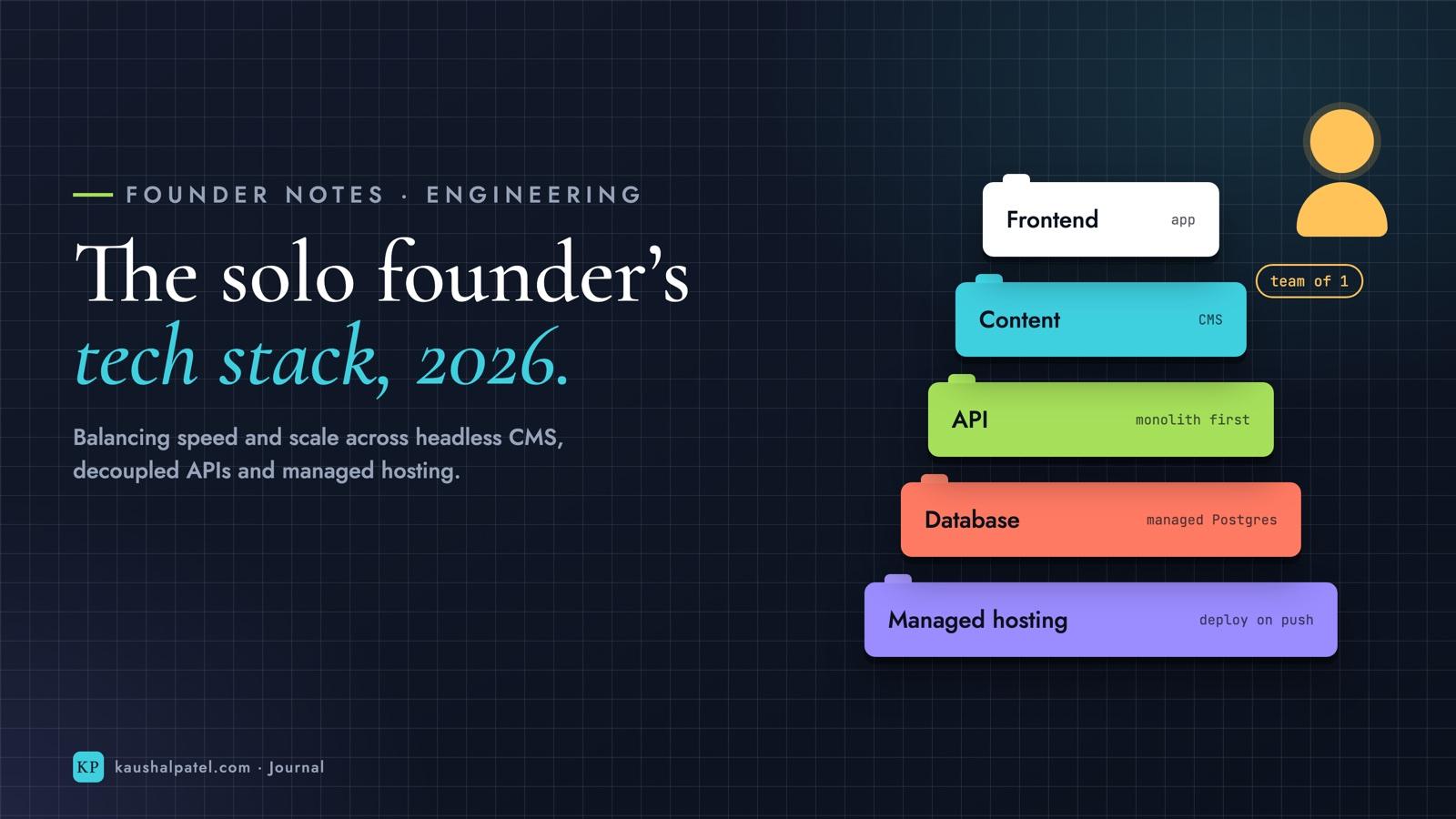
Headless CMS, decoupled APIs or a monolith, managed hosting or a VPS: how to pick a 2026 stack one person can run, with a hosting cost calculator and checklist.
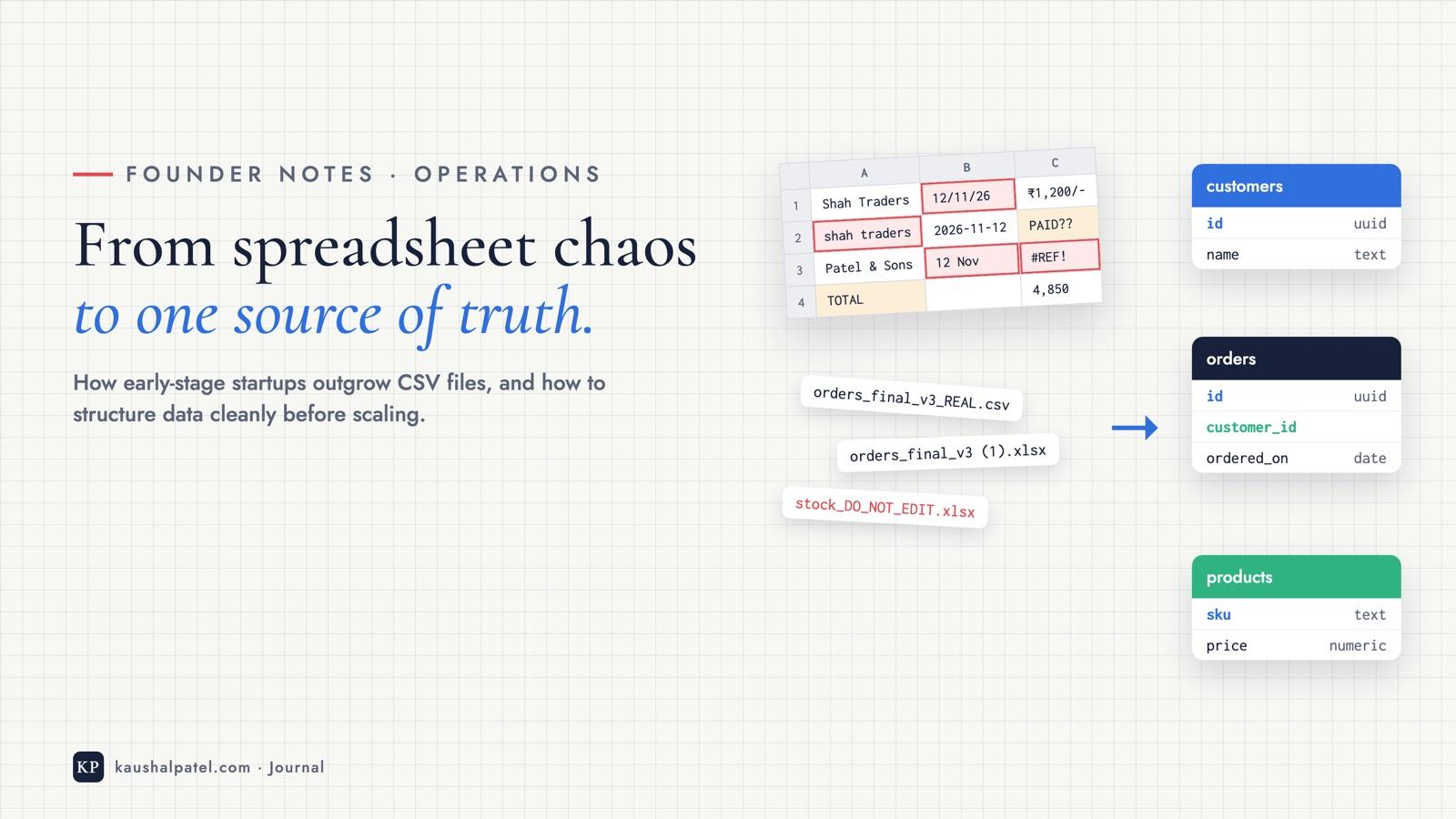
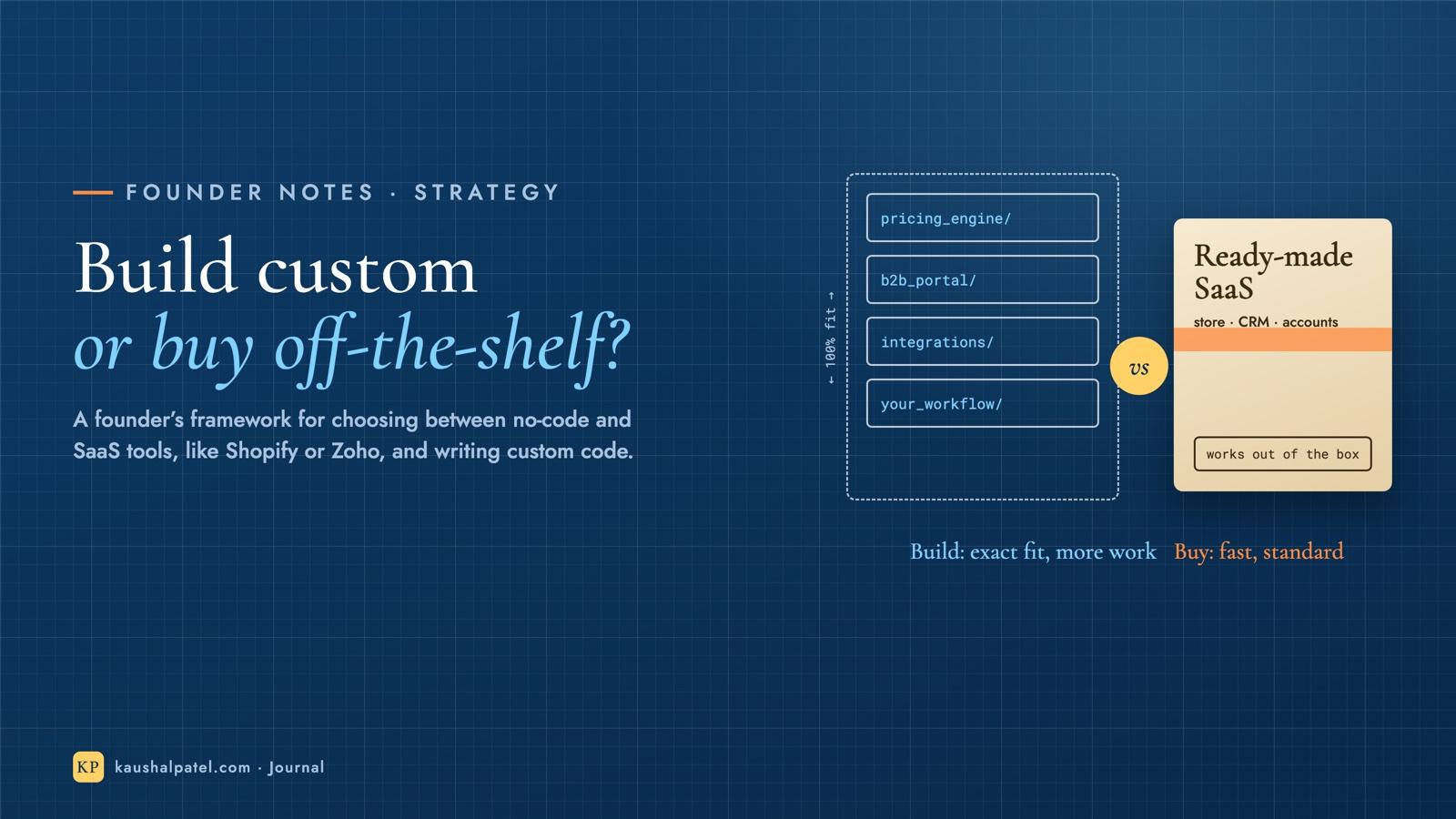
Build vs buy software: when to use no-code and SaaS tools like Shopify or Zoho and when to write custom code, with a decision tree, cost guide and matrix.