15 Free Digital Marketing Tools Every Business Should Use
15 free digital marketing tools every business should use in 2026: analytics, SEO, local search, social, design, email and CRM, plus a 30-day setup plan.
16 min read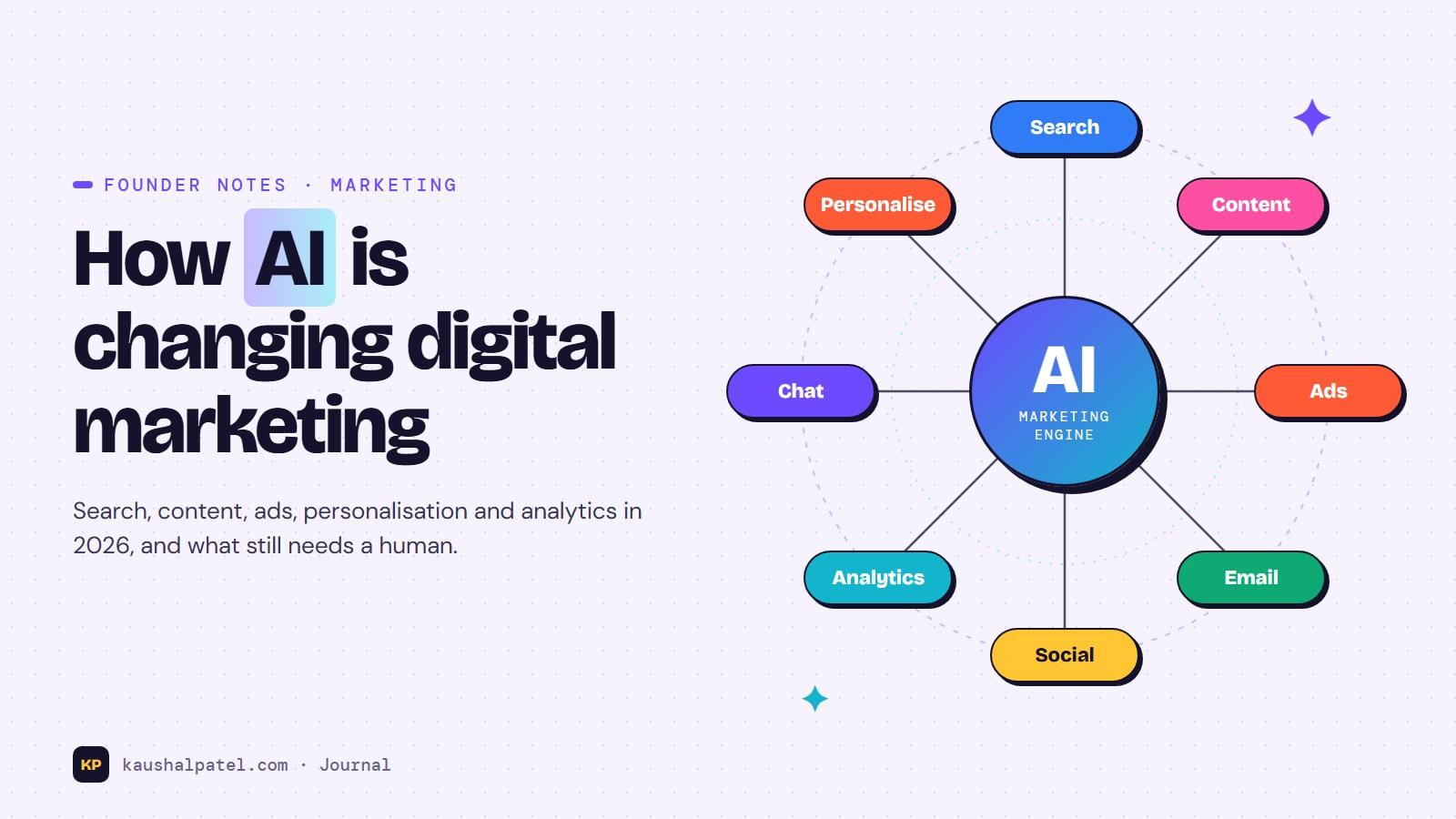
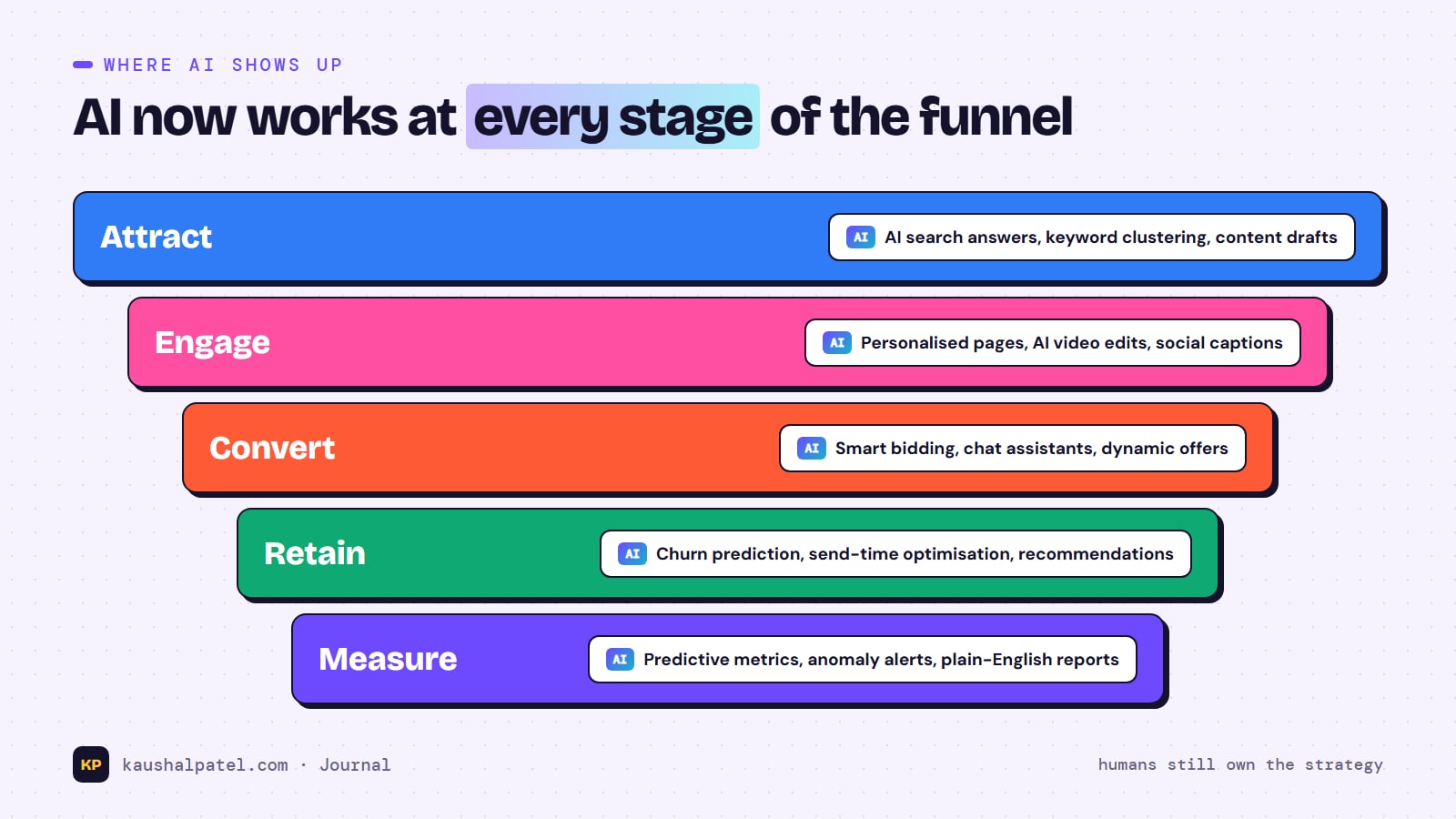
Artificial intelligence has moved from a marketing buzzword to the engine underneath almost every channel. It writes first drafts, chooses who sees an ad, decides which product a visitor sees first, predicts which customers are about to leave and, more and more, answers the search query before anyone clicks a link. If you run or market a business in 2026, AI is already shaping your results, whether or not you use it yourself.
This guide explains how AI is changing digital marketing in practical terms: the nine biggest shifts, what each one means for a small or growing business, which tools to use, the risks to watch and a 90-day plan to adopt AI without wrecking your brand. You’ll also find comparison tables, animated examples and a reusable prompt template. I use AI daily in my own businesses for research, drafts and analysis, so this is written from practice, not a press release.
AI in digital marketing is the use of machine learning and generative models to plan, create, target, personalise and measure marketing. It isn’t one tool. It’s three families of technology that have arrived at different times:
| Type of AI | What it does | Marketing examples | Mature since |
|---|---|---|---|
| Predictive AI | Finds patterns in data and forecasts outcomes | Smart bidding, lookalike audiences, churn and purchase prediction, product recommendations | 2010s |
| Generative AI | Creates new text, images, audio and video | Blog drafts, ad copy, social captions, product photos, video edits, voice-overs | 2023 onwards |
| Agentic AI | Plans and carries out multi-step tasks with tools | Research agents, campaign set-up assistants, automated reporting, customer support agents | Emerging in 2025–2026 |
Predictive AI has quietly run ad platforms for years. What changed is that generative AI put the technology in every marketer’s hands, and agentic AI is starting to connect the steps together. For the wider picture beyond marketing, see how AI is changing the future of technology.
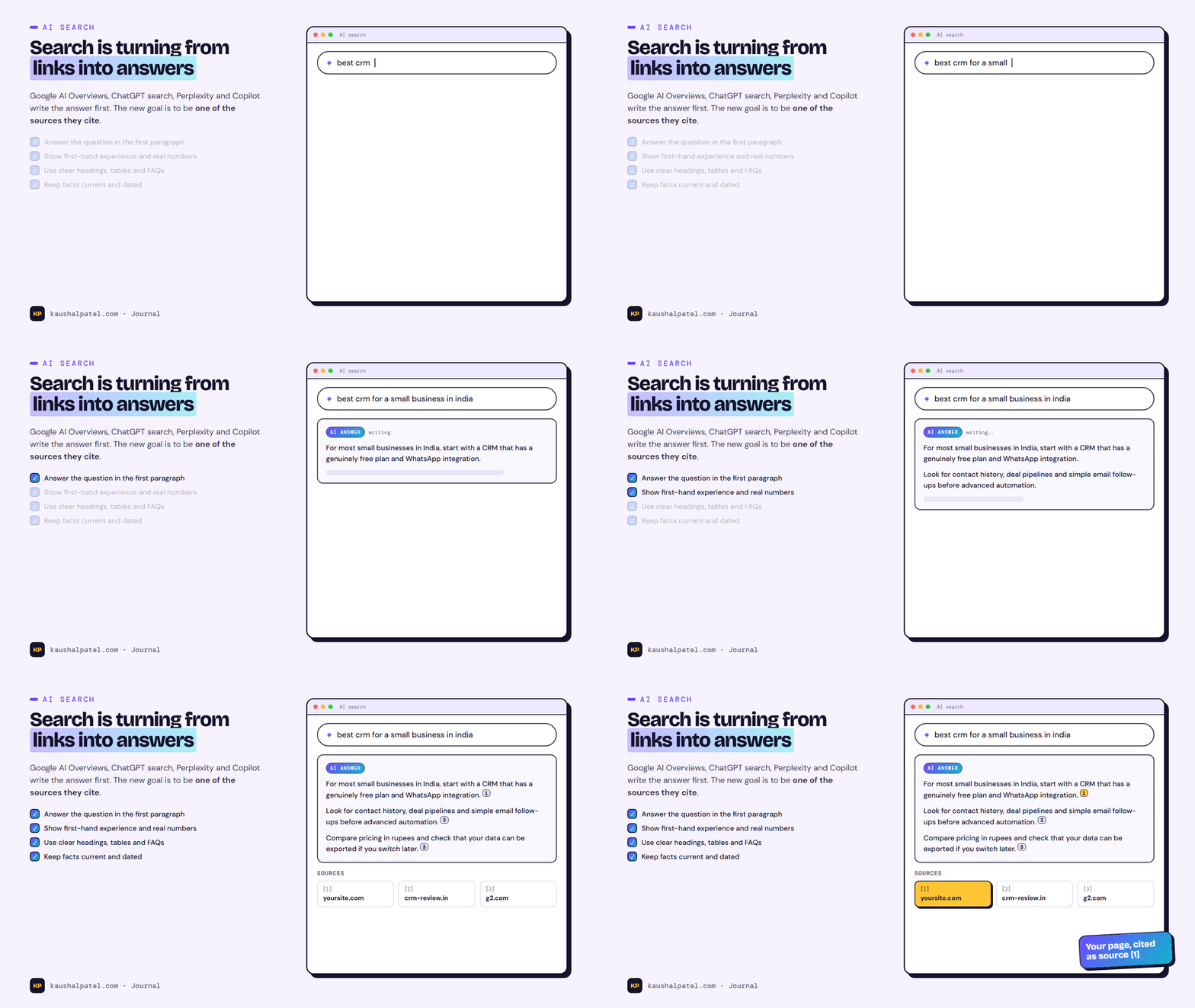
The biggest change is in search itself. Google AI Overviews and AI Mode, ChatGPT search, Perplexity and Microsoft Copilot now write a summary answer at the top, with a handful of cited sources. For many simple questions, people get what they need without clicking at all. For complex, commercial questions, the cited sources get a smaller but far more qualified stream of visitors.
This has created a new discipline, often called generative engine optimisation (GEO) or answer engine optimisation. It doesn’t replace SEO; it builds on it. AI systems still lean on pages that search engines already trust. What helps you get cited:
The fundamentals are the same ones I cover in how to rank a website on Google. If you’re deciding between organic and paid visibility, SEO vs SEM explains how the two fit together now that paid ads are also appearing inside AI answers.
Generative AI can draft a blog post, ten ad headlines or a month of social captions in minutes. That’s genuinely useful for outlines, first drafts, repurposing (turning one article into a newsletter, a carousel and a short video script) and translation into Hindi, Gujarati or other languages.
The catch: when everyone can publish infinite average content, average content stops working. Google’s guidance is clear that it rewards helpful content however it’s produced, but its spam policies target scaled content abuse: mass-producing pages mainly to manipulate rankings. The businesses that win use AI to go faster, then add what AI can’t: real experience, original data, strong opinions and a recognisable voice.
Choosing the right assistant matters. I compare the main options in ChatGPT vs Gemini vs Claude, and list more in the top 10 AI tools for productivity.
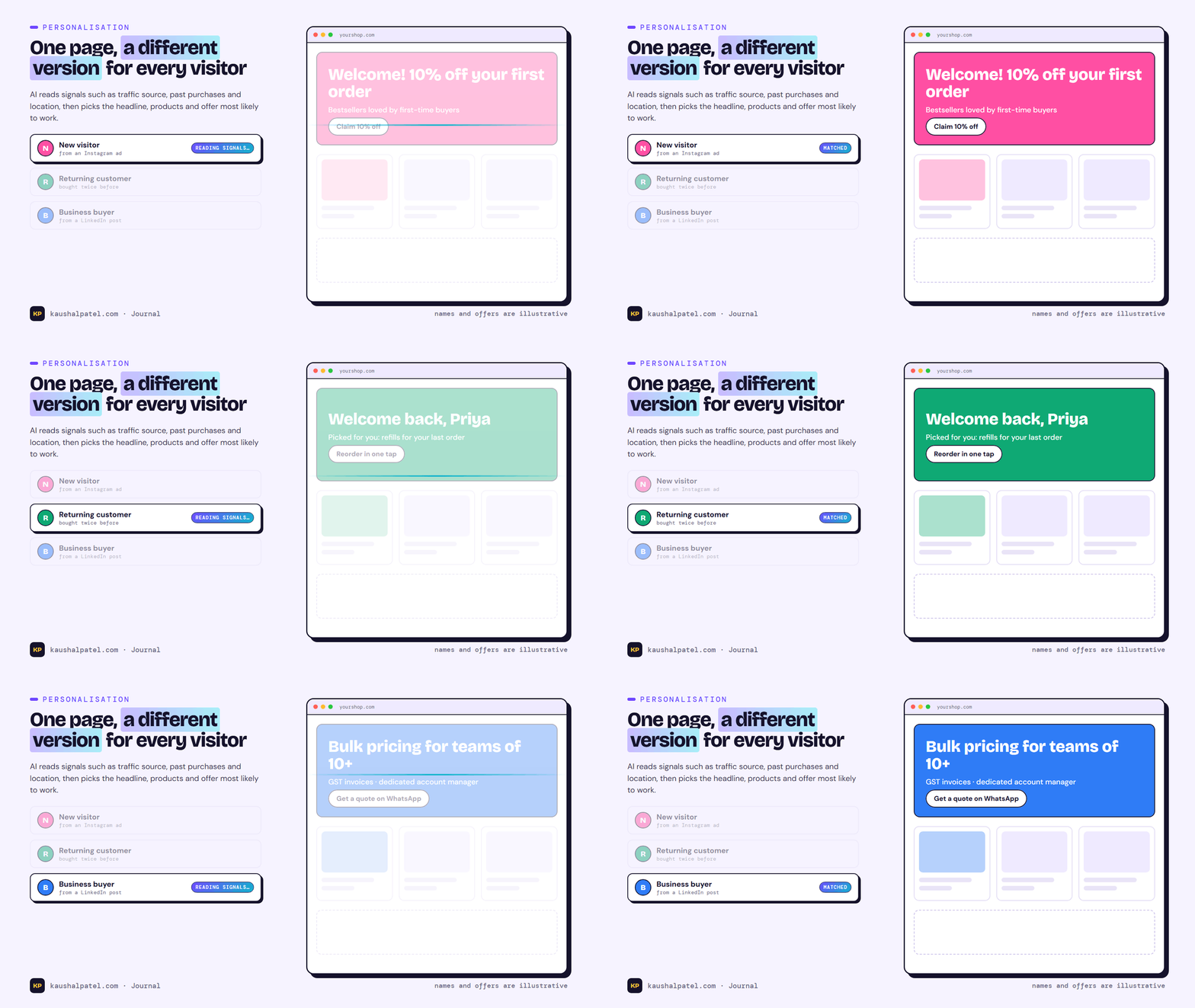
Personalisation used to mean putting a first name in an email. AI makes it possible to change headlines, product order, offers and even prices for each visitor, based on signals such as traffic source, location, device, browsing history and past purchases. E-commerce recommendations (“customers who bought this also bought…”) are the familiar version; dynamic landing pages and personalised email content are the next step.
Start small. Personalise one high-traffic page for two or three clear segments, measure it against the default version, and only then expand. And respect consent: personalisation built on data people didn’t knowingly share erodes trust fast.
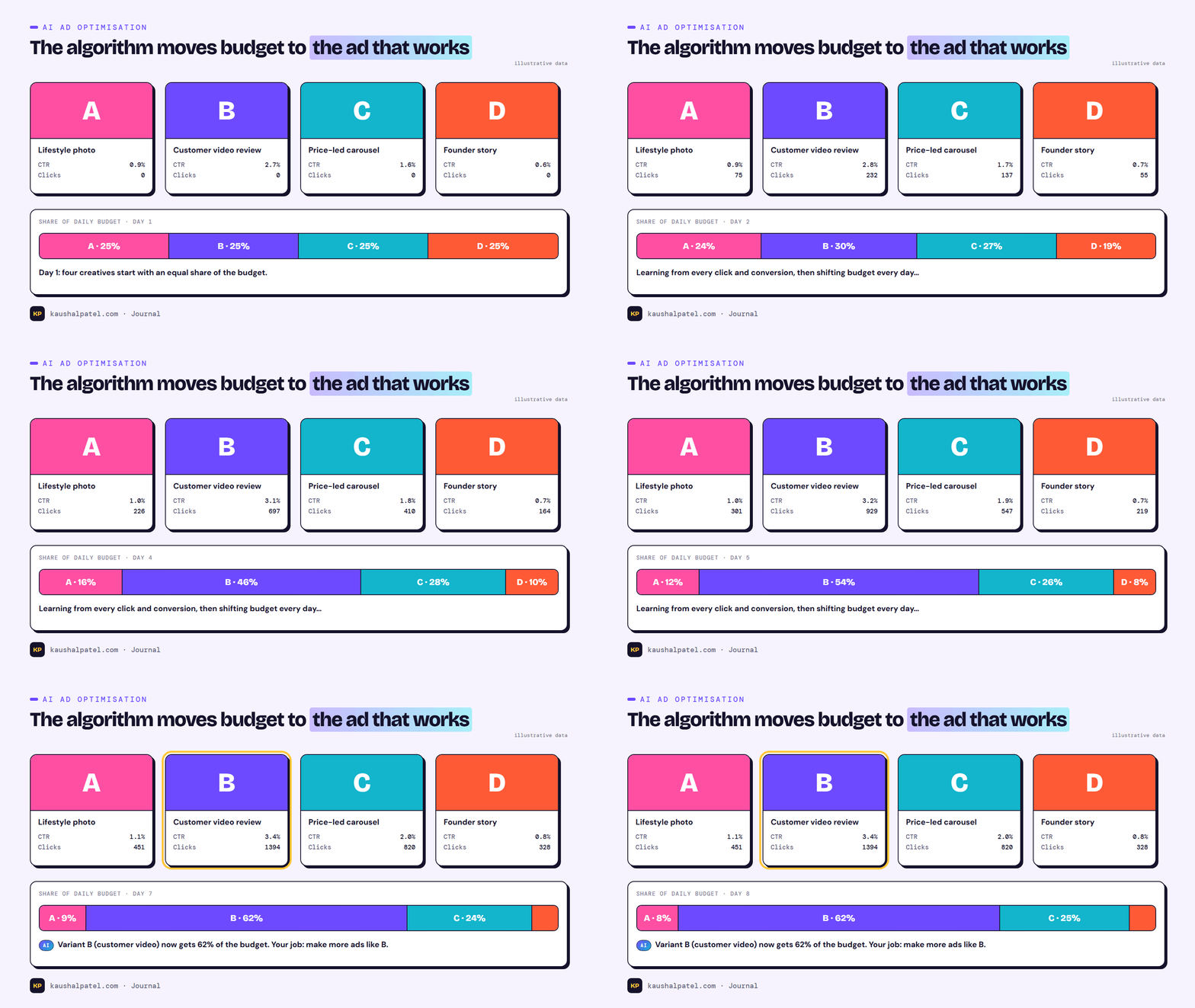
Google’s Performance Max and AI-powered search campaigns, and Meta’s Advantage+ campaigns, now decide much of the targeting, bidding and placement for you. You supply goals, budgets, conversion data and creative assets; the algorithm tests combinations and moves money towards what converts.
That changes the marketer’s job. Manual audience tweaking matters less. Three inputs matter more:
If you sell on several channels at once, the same principle applies to margins: let automation handle the bidding, but keep the unit economics in your own hands, as I explain in multi-channel selling without losing your margin.
Analytics tools now tell you what’s likely to happen, not just what happened. Google Analytics 4 offers predictive metrics such as purchase probability and churn probability once a property has enough conversion data, and can build audiences from them, for example “likely to purchase in the next 7 days”. Tools such as Microsoft Clarity add AI summaries of session recordings and heatmaps, so you can see why people drop off without watching hours of video.
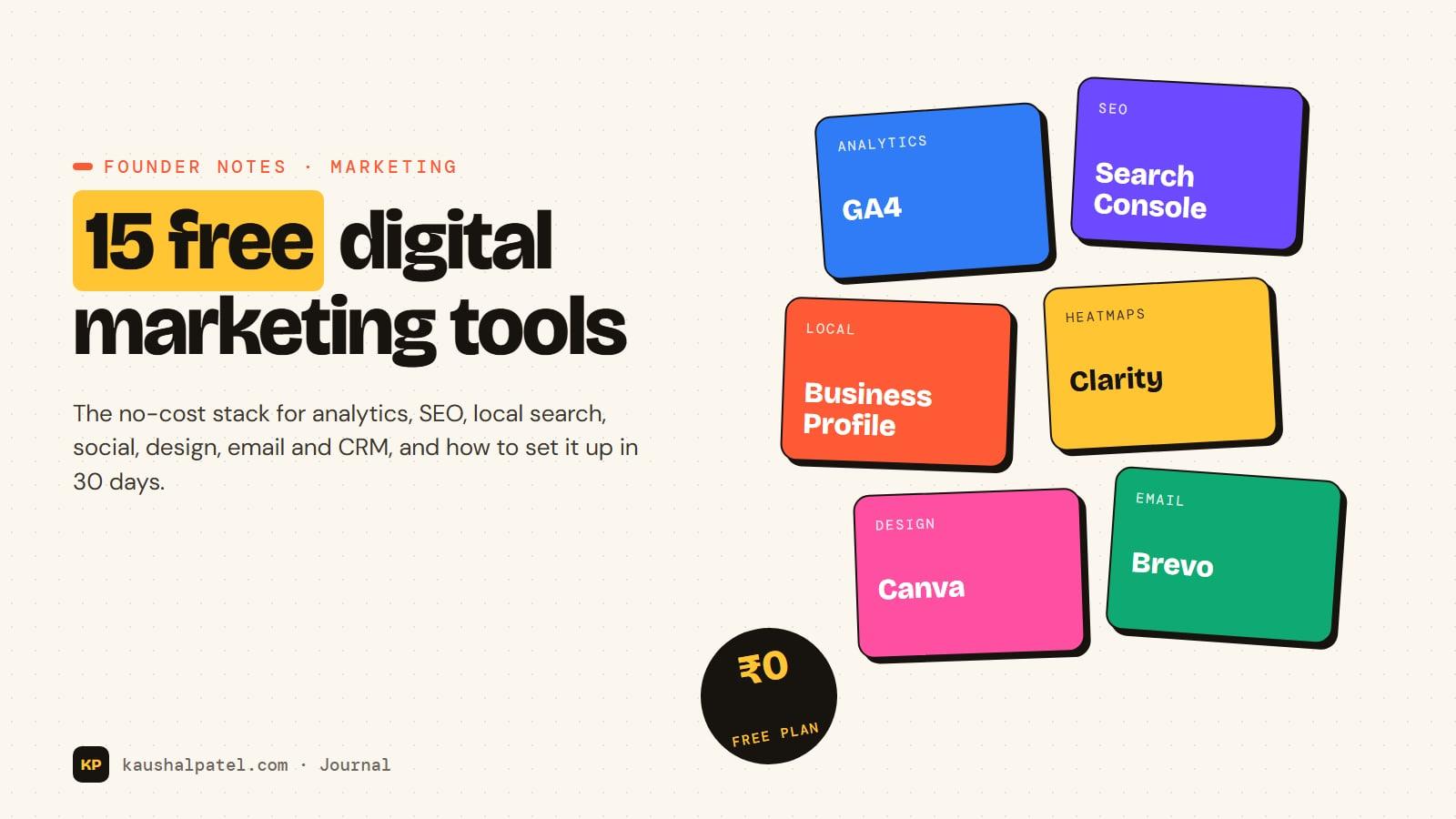
The practical win is time: anomaly alerts flag a sudden drop in conversions, and plain-English questions replace hours of report building. The foundation is still clean tracking. If you haven’t set that up yet, start with the free stack in 15 free digital marketing tools every business should use.
AI chat assistants on websites, WhatsApp and social inboxes can answer product questions, recommend options, take bookings and qualify leads around the clock. Unlike older rule-based chatbots, modern assistants understand free-form questions and can draw answers from your own product catalogue, FAQs and policies.
The rule that keeps customers happy: always offer an easy hand-off to a human, and never let the bot invent prices, delivery dates or policies. Connect it to accurate, up-to-date information or keep it to questions it can answer reliably.
Short-form video dominates social feeds, and AI has removed most of the production barrier. Tools now cut long recordings into clips, add captions automatically, remove filler words, translate and dub videos into other languages, generate b-roll and resize content for every platform. Design tools such as Canva’s AI features turn a single brief into on-brand posts in seconds.
This favours businesses with something real to show. A founder explaining a product on camera, edited quickly with AI, usually beats a polished but generic AI-generated video. For the human side of this, see building in public as an introverted founder.
Email platforms and CRMs now include AI that suggests subject lines, writes follow-up drafts, picks the best send time for each contact, scores leads by likelihood to buy and summarises long customer histories before a sales call. HubSpot, Brevo, Zoho and most other major platforms have built these features into their products.
Email remains one of the highest-return channels because you own the list. AI makes it easier to send the right message at the right moment, rather than the same newsletter to everyone.
The newest shift is agentic AI: assistants that can carry out multi-step tasks, such as researching competitors, drafting a campaign brief, building the report from several data sources or updating product listings. In 2026 these agents are useful for well-defined, repetitive work, especially research and reporting, but they still need clear instructions, limited permissions and human review before anything goes live.
Think of an agent as a fast junior assistant: brilliant at preparation, not yet trusted with the final decision. The same pattern is playing out in physical work, as I described in the future of robotics and automation.
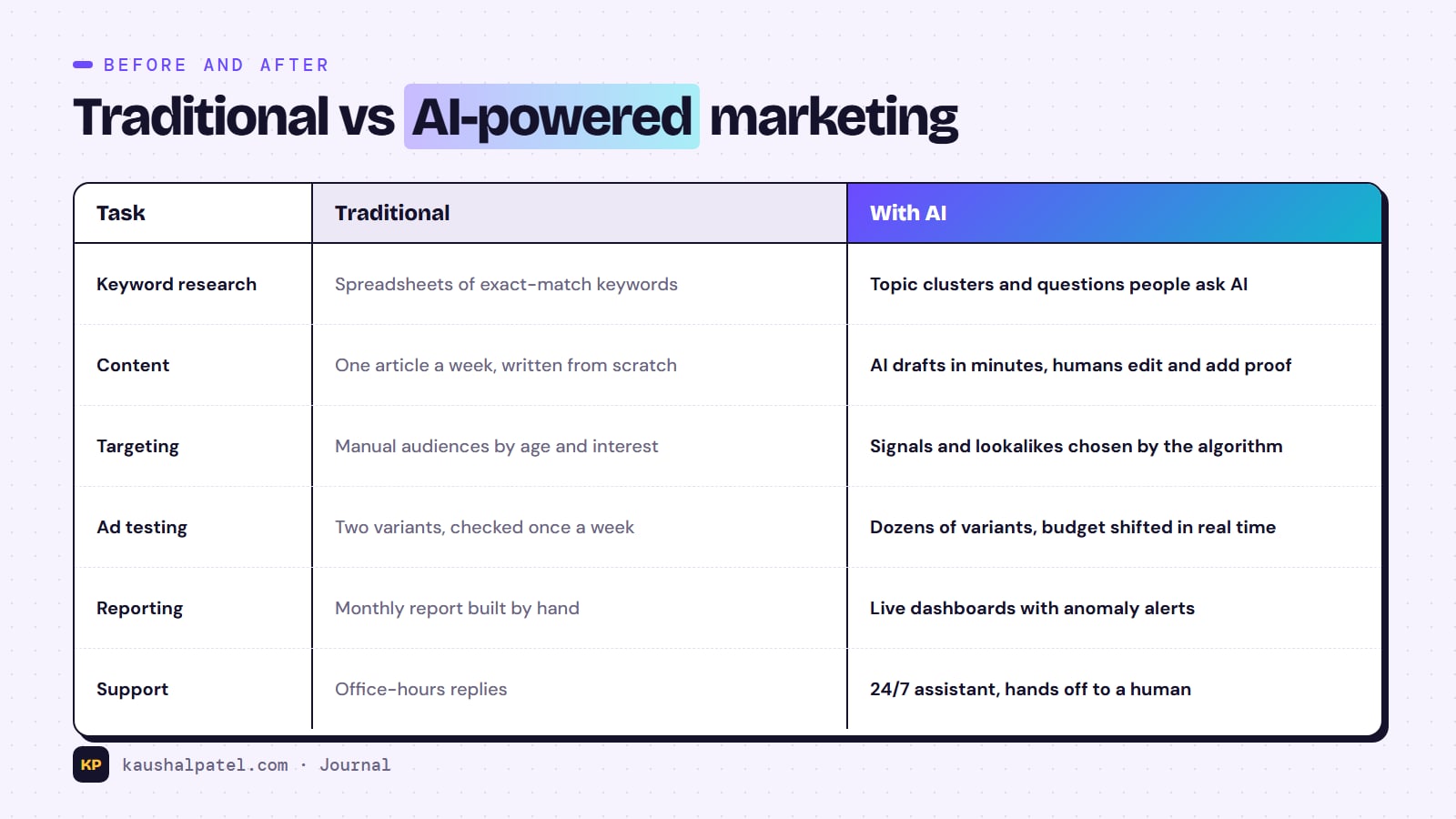
| Marketing task | Traditional approach | AI-powered approach | What the human still does |
|---|---|---|---|
| Keyword and topic research | Spreadsheets of exact-match keywords | Topic clusters, questions and intent mapped automatically | Choose topics that fit the business and its expertise |
| Content production | Written from scratch, slowly | AI outlines and drafts in minutes | Add experience, data and voice; fact-check everything |
| Audience targeting | Manual demographics and interests | Algorithmic signals and lookalikes | Feed accurate conversion data; set exclusions |
| Ad creative testing | A few variants, reviewed weekly | Many variants, budget shifted daily | Produce genuinely different creative ideas |
| Personalisation | One version for everyone | Content and offers per segment or visitor | Decide what’s helpful vs intrusive; manage consent |
| Reporting | Manual monthly reports | Live dashboards, predictions and alerts | Decide what to change and why |
| Customer support | Office-hours replies | 24/7 AI assistant | Handle complex cases; keep answers accurate |
You don’t need a dozen subscriptions. Many tools you already use have AI built in. A practical starting point:
| Task | Example tools | Best first use |
|---|---|---|
| Research, writing and ideas | ChatGPT, Claude, Gemini | Outlines, first drafts, summarising customer feedback |
| Design and images | Canva AI features, Adobe Firefly | On-brand social posts and ad variations |
| Video editing | CapCut, Descript | Auto-captions and turning long videos into clips |
| Search and social ads | Google Performance Max, Meta Advantage+ | Automated bidding with good conversion data |
| Analytics and insight | Google Analytics 4, Microsoft Clarity | Predictive audiences and AI session summaries |
| Email and CRM | HubSpot, Brevo, Zoho CRM | Subject lines, send-time optimisation, lead scoring |
| Customer conversations | Website chat assistants, WhatsApp Business integrations | Answering common questions with a human hand-off |
Features and pricing change quickly in this space. Check what’s included in each plan before building a process around it.
AI makes marketing faster. It also makes mistakes faster. The main risks to manage:
For all the change, the core of marketing is remarkably stable. AI doesn’t decide who your best customers are, what makes your offer different, or why someone should trust you. Positioning, pricing, product quality and relationships remain human work, and they’re what AI tools amplify, for better or worse.
Distribution still beats features, too. A great product with no route to customers fails just as surely with AI as without it, as I argue in distribution first, product second. AI makes distribution cheaper to execute; it doesn’t replace knowing where your customers are.
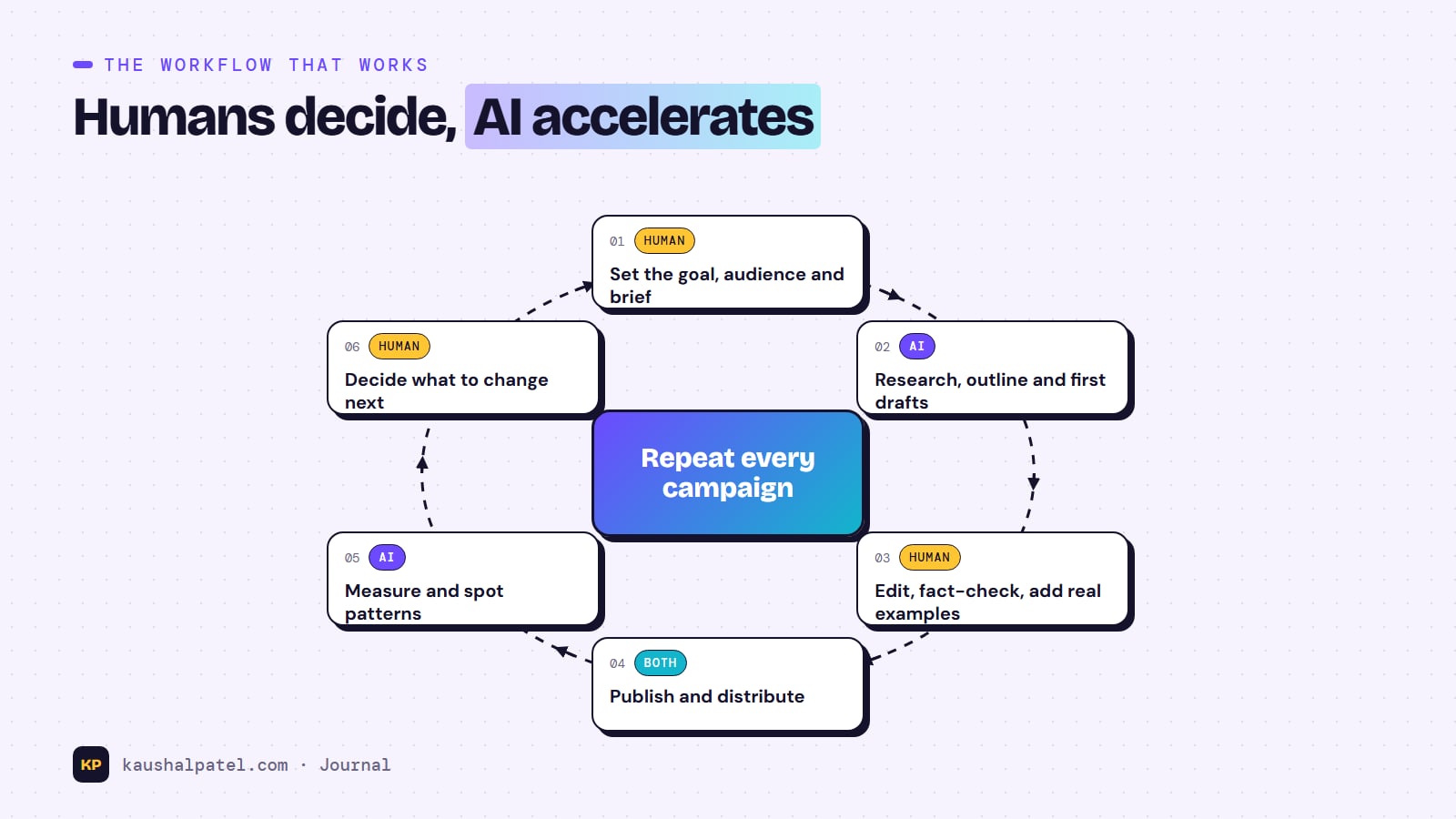
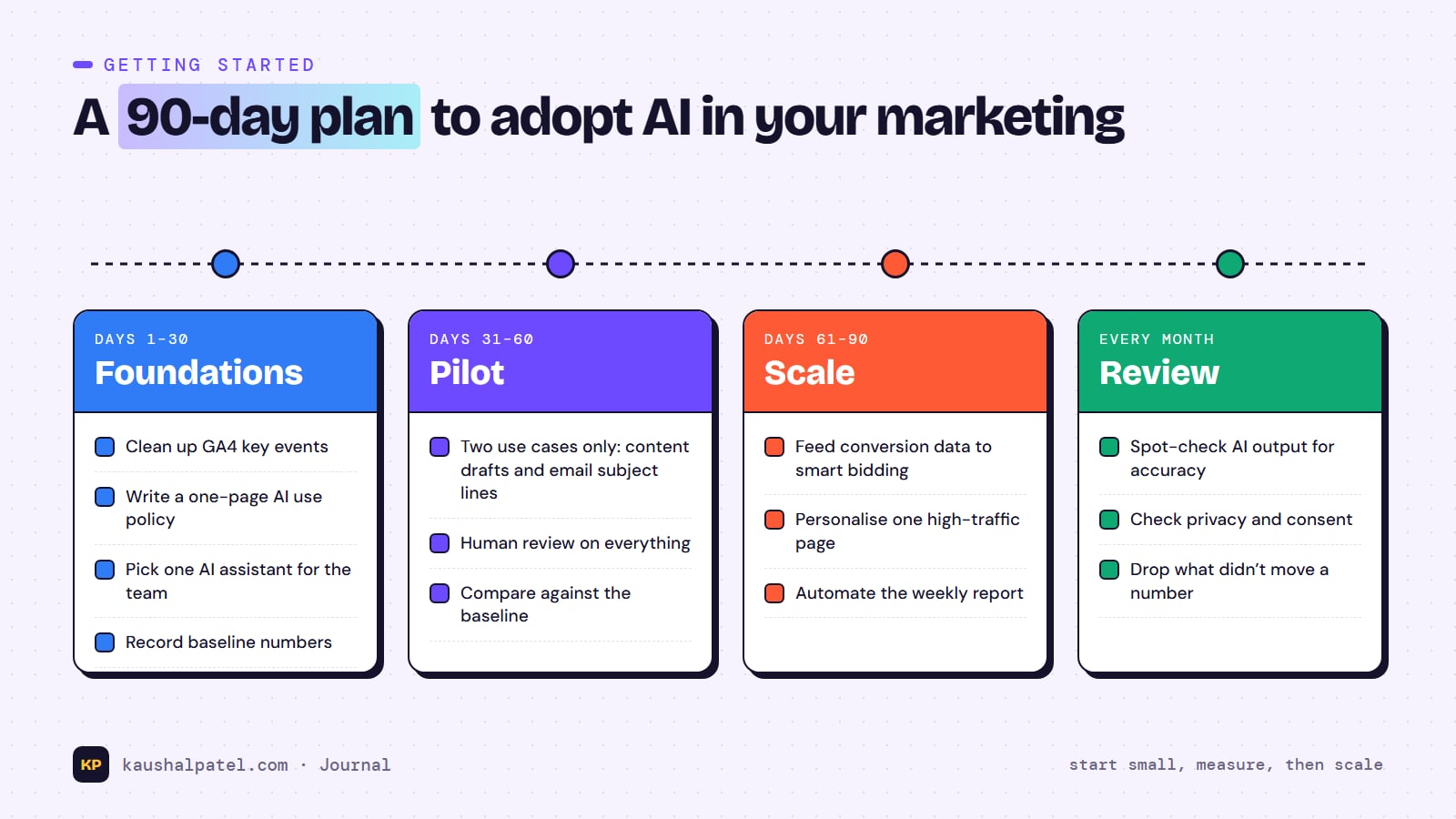
Good AI output starts with a good brief. This template works with any assistant and stops most generic results before they start:
AI MARKETING BRIEF TEMPLATE (copy, fill in, paste into your AI assistant)

ROLE:      You are a marketing writer for [business], a [what you do] in [city/market].
AUDIENCE:  [who they are, what they want, what worries them]
GOAL:      [one action: book a call / buy / sign up / reply on WhatsApp]
FORMAT:    [blog outline / 5 ad headlines / 3 Instagram captions / email]
VOICE:     [3 adjectives, e.g. plain, warm, confident]. Avoid: [hype words you never use]
FACTS:     Use ONLY these facts: [prices, features, dates, proof points]
           If something is missing, ask me. Do not invent numbers or claims.
EXAMPLE:   [paste one piece of your own content that sounds right]

Then: review, fact-check, add one real example from your own experience.
If your website makes publishing slow, AI won’t fix that bottleneck. A good content management system will; see what a CMS is and how it helps your website. You can browse more guides like this one in the Marketing section of the journal.
AI is changing digital marketing by automating content creation, personalising websites and emails for each visitor, optimising ad targeting and bidding in real time, predicting customer behaviour in analytics, powering 24/7 chat assistants and turning search results into AI-written answers that cite a few sources.
AI is replacing many repetitive marketing tasks, such as first drafts, basic reporting and manual bid changes, but not the marketer’s judgement. Strategy, positioning, creative ideas, brand voice, fact-checking and customer understanding still need people. Marketers who use AI well are replacing those who don’t.
Generative engine optimisation is the practice of making your content more likely to be cited in AI-generated answers from tools such as Google AI Overviews, ChatGPT search, Perplexity and Copilot. It builds on SEO with answer-first writing, clear structure, original evidence and up-to-date facts.
Not by itself. Google evaluates whether content is helpful and original, not whether AI was involved. Mass-produced, low-value pages created mainly to rank can be treated as spam. AI-assisted content that is edited, fact-checked and enriched with real experience can rank well.
Start with built-in AI features in tools you already use: an AI assistant for drafts and ideas, Canva for design, AI subject lines in your email platform, and automated bidding in Google or Meta ads with accurate conversion tracking. Pilot two use cases, measure the results and expand from there.
The main risks are inaccurate or invented facts, generic content that sounds like everyone else, privacy and consent problems with customer data, copyright issues with generated media, impersonation and deepfake scams, and automated campaigns drifting towards low-quality results without human review.
AI is changing digital marketing faster than any shift since social media: search is becoming answers, content and creative are nearly free to produce, ads optimise themselves and analytics predict what comes next. That raises the floor for everyone, which means the advantage moves to what AI can’t copy: real expertise, original proof, a clear point of view and genuine relationships with customers. Use AI to move faster, keep humans in charge of direction and quality, and make your content worth citing.
Want help putting AI to work in your marketing, analytics or website? Let’s talk.

Entrepreneur · Business Owner · IT Consultant — writing about startups, AI and building products.
Keep reading
15 free digital marketing tools every business should use in 2026: analytics, SEO, local search, social, design, email and CRM, plus a 30-day setup plan.
16 min readQuiet, written building in public: share architecture decisions, mistakes and real numbers to attract early adopters and talent, with an update builder.
10 min readMarketplace fees, ad spend and D2C acquisition: how to see your true profit per order in every channel, with a margin calculator, break-even ROAS and a roadmap.
12 min read