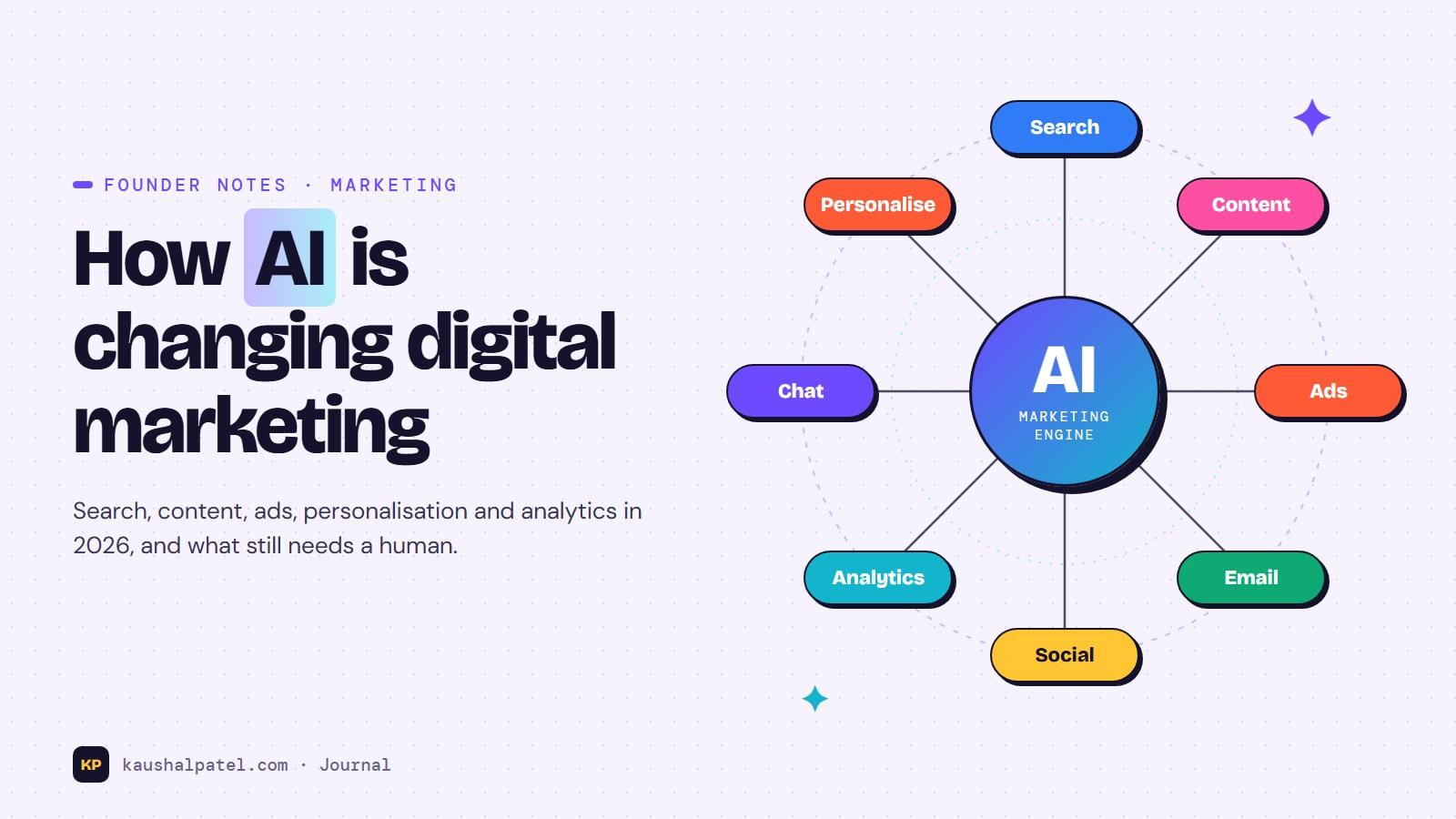
How AI Is Changing Digital Marketing
How AI is changing digital marketing in 2026: AI search and GEO, content, personalisation, ads, analytics and chatbots, plus tools, risks and a 90-day plan.
16 min read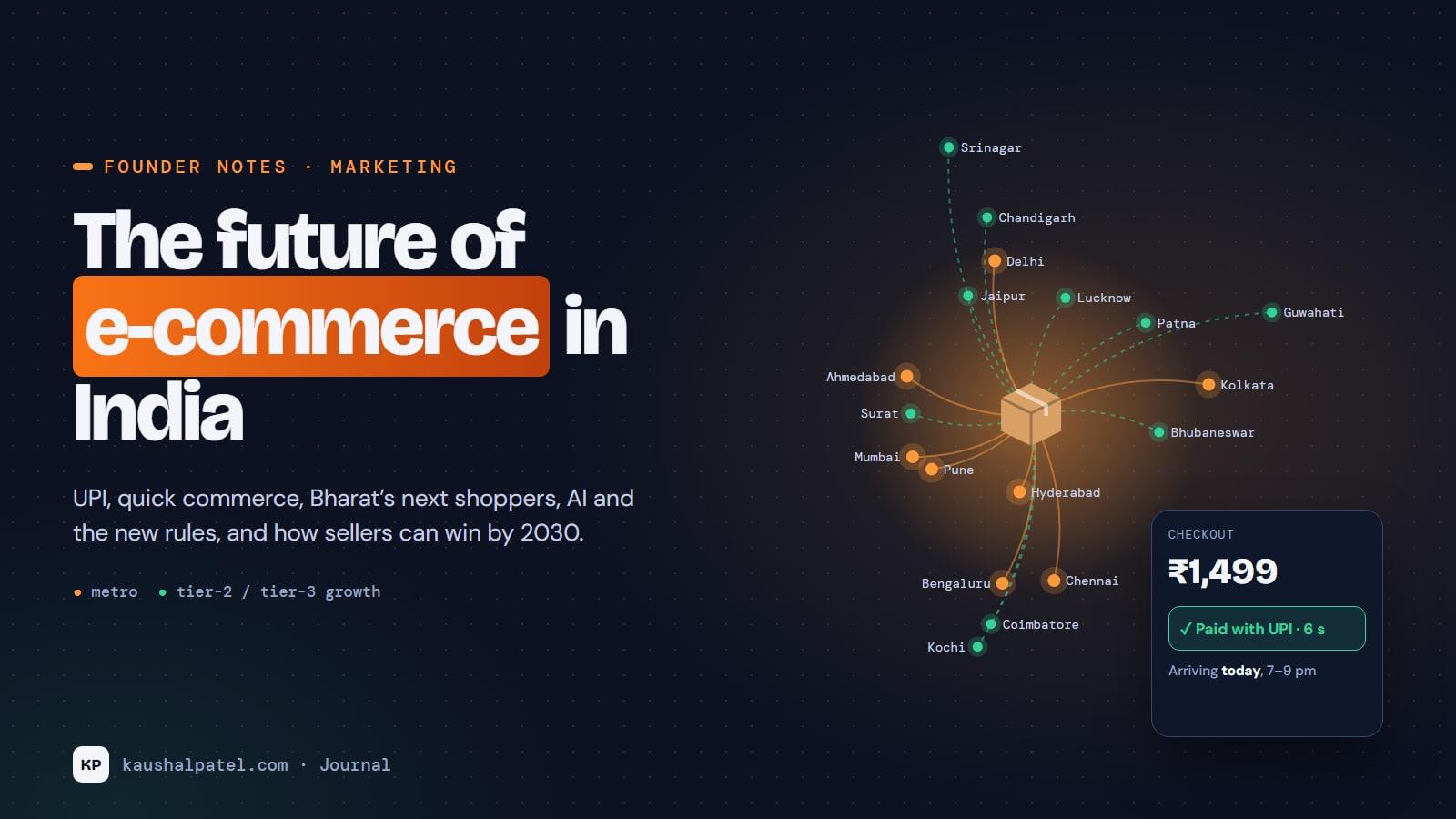
Ten years ago, shopping online in India meant a laptop, a debit card, a long OTP wait and a week for delivery. Today a shopper in Indore can order a kurta on her phone in Hindi, pay with UPI in a few seconds and get groceries at her door before the kettle boils. India has gone from an e-commerce afterthought to one of the largest and fastest-changing online markets in the world.
And the biggest changes are still ahead. This guide looks at the future of e-commerce in India: how big the market is, what is driving it, the ten trends that will shape the next five years, the rules every seller now has to follow, and a practical playbook for brands, D2C founders and small businesses who want to win. You’ll find comparison tables, animated explainers and a checklist you can act on this week.
Numbers in this market change fast, and different reports measure different things (online retail, all e-commerce including travel and food delivery, or gross order value). Here is a rounded snapshot from widely cited sources, so you have a sense of scale:
| Indicator | Approximate figure | Source |
|---|---|---|
| Online shoppers | About 270 million in 2024, the third-largest base in the world | Bain & Company with Flipkart, How India Shops Online |
| Online retail (e-retail) sales | Roughly US$60 billion in 2024, expected to reach US$170–190 billion by 2030 | Bain & Company with Flipkart |
| Share of total retail | Still a single-digit percentage, so most shopping is offline | Industry estimates |
| Internet users | More than 850 million | IAMAI and Kantar |
| UPI payments | More than 20 billion transactions a month since mid-2025 | NPCI |
| Where new shoppers live | Mostly tier-2 and smaller towns | Bain, Flipkart, Meesho and other platforms |
Two things stand out. First, the room to grow is enormous: online is still a small slice of how Indians shop. Second, the next wave of buyers looks very different from the first: less English-speaking, more price-aware, more mobile-only and spread far beyond Delhi, Mumbai and Bengaluru.
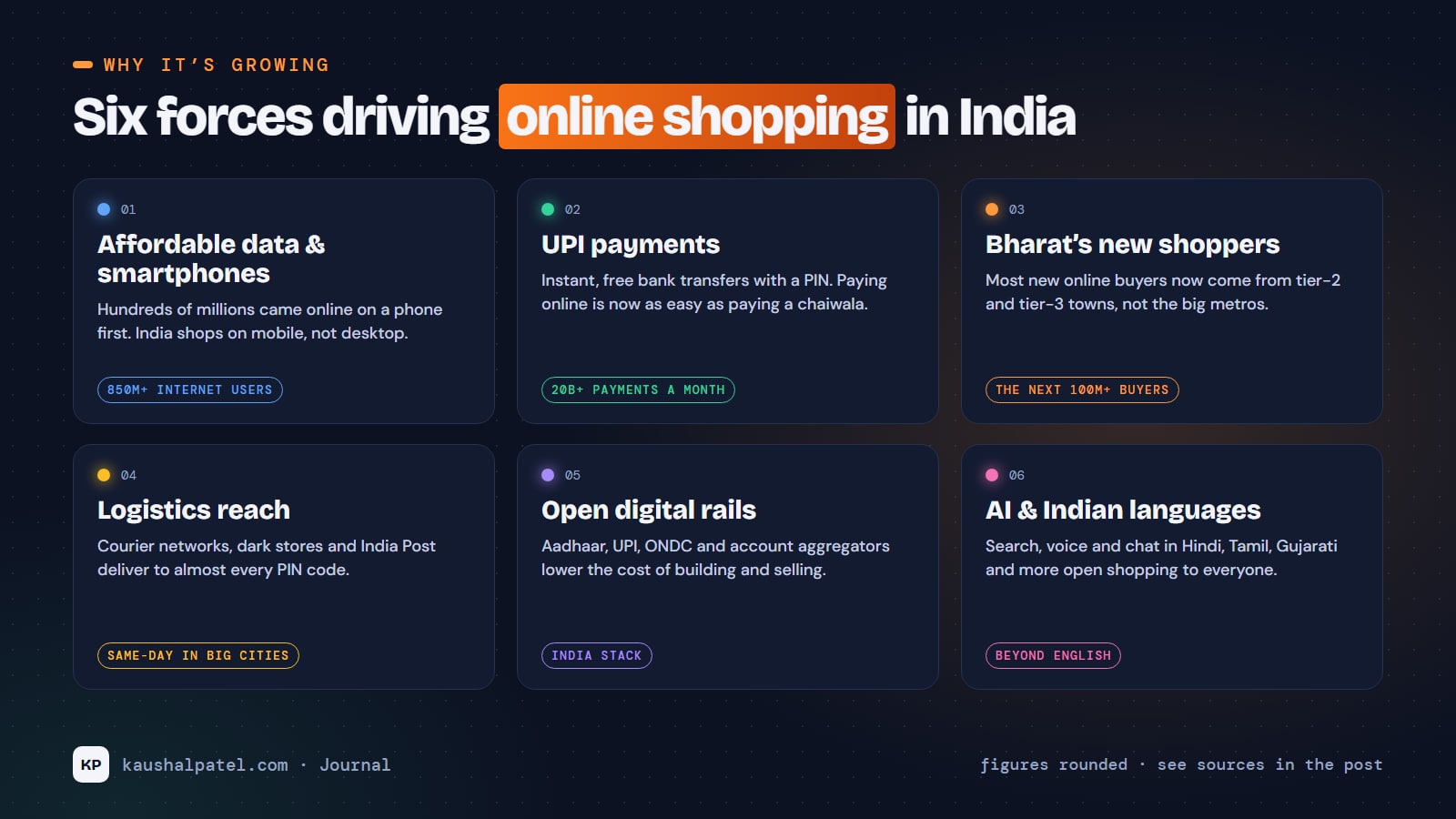
The first decade of Indian e-commerce was built for metro buyers. The next one will be built for Bharat: tier-2, tier-3 and rural India. These shoppers often discover products on social media, compare prices carefully, prefer trusted brands or familiar sellers, and want reassurance before paying: clear return policies, real photos, reviews from people like them and support in their language.
For sellers, this means value-focused ranges, smaller pack sizes, regional festivals in your marketing calendar (Pongal, Onam, Durga Puja and Navratri, not only Diwali), and delivery promises you can actually keep outside the big cities.
UPI changed how India pays, and it is changing how India shops. A UPI checkout needs no card number, no expiry date and no separate OTP page, so fewer buyers give up halfway. Newer features push it further: UPI Lite for small payments, UPI AutoPay for subscriptions, RuPay credit cards on UPI and pre-approved credit lines on UPI.
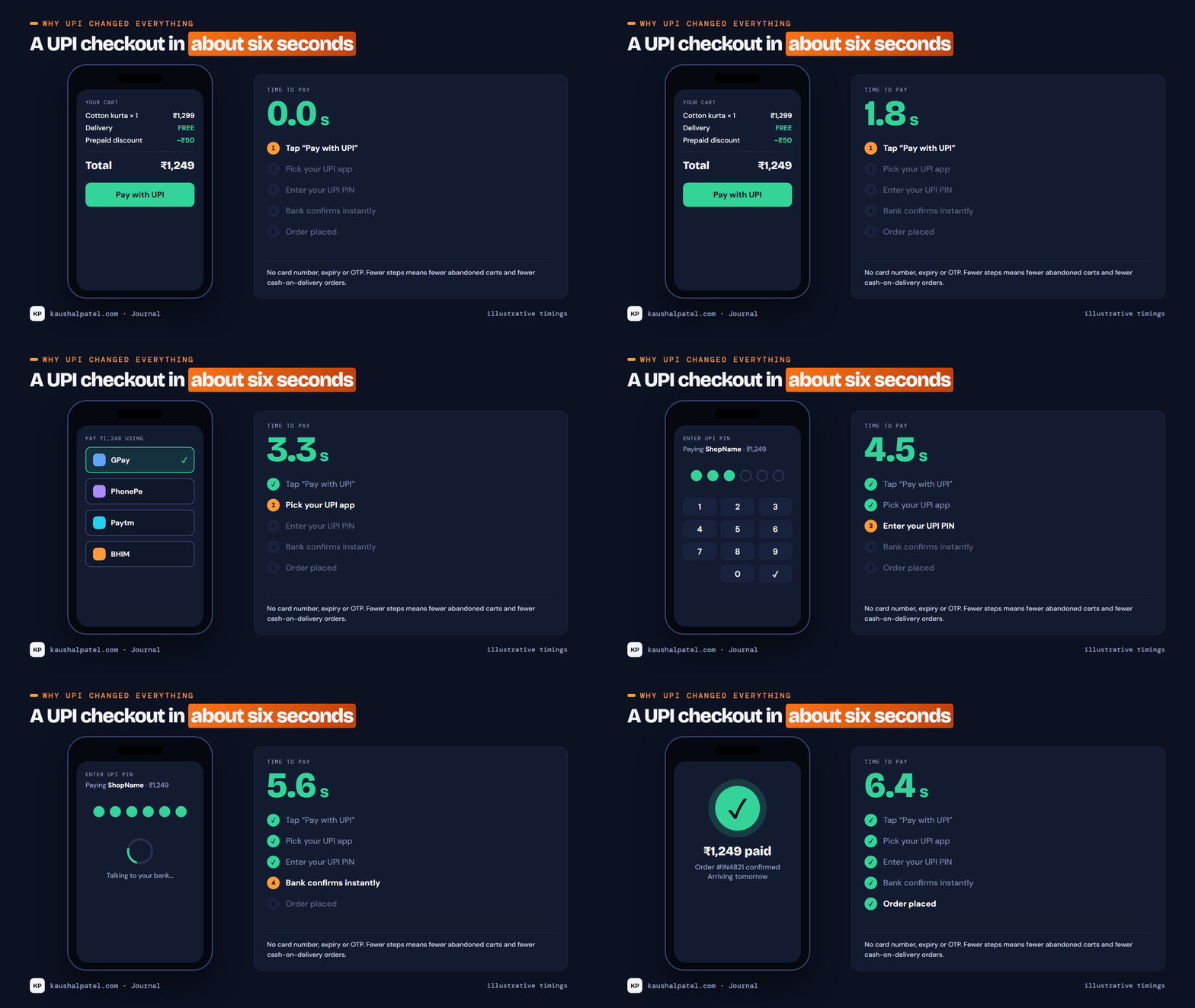
Practical takeaway: put UPI first on your checkout, show a UPI QR on invoices and payment links (you can make one with our free QR code generator, which supports UPI), and test small prepaid incentives such as free shipping or a ₹25–₹50 discount for paying upfront.
Quick commerce (q-commerce) promises delivery in roughly 10 to 30 minutes from small neighbourhood warehouses called dark stores. Blinkit, Zepto, Swiggy Instamart and others started with groceries, and now sell electronics, beauty, toys, stationery, gifts and even phones. Big marketplaces have launched their own fast-delivery services in response.
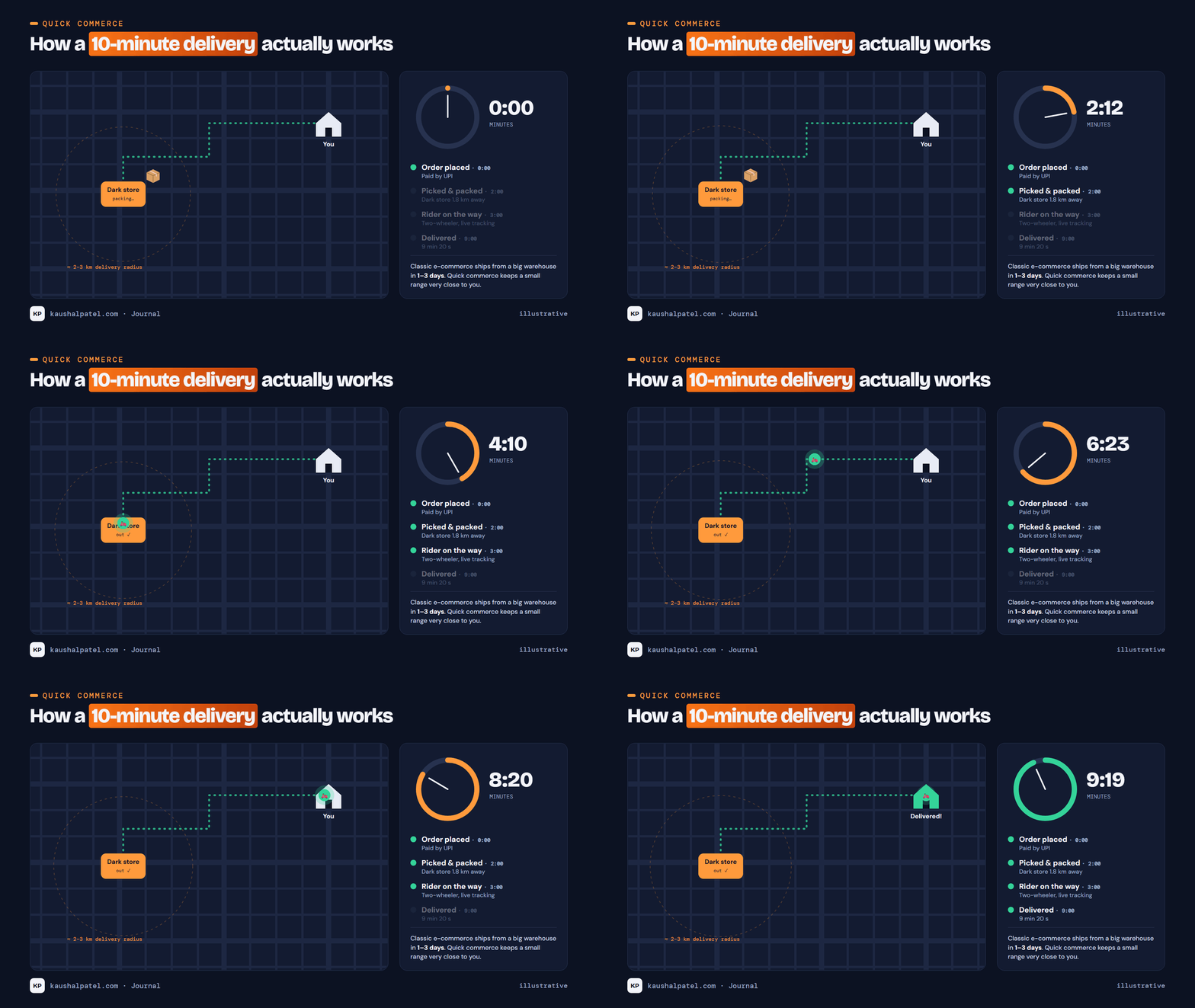
For brands, quick commerce is a new shelf, with its own rules: a small, fast-moving range, tight packaging, sharp pricing and high advertising costs inside the apps. It works best for everyday, impulse and urgent items. For considered purchases, a marketplace or your own website often still makes more sense.
The Open Network for Digital Commerce (ONDC) is a government-backed network that lets any buyer app talk to any seller app, a bit like UPI did for payments. A small shop can list once through a seller app and be discoverable in many buyer apps, instead of depending on a single platform.
Adoption has been uneven (strongest in food, groceries and mobility so far), and the experience still varies between apps. But the direction matters: lower platform dependence, more choice for small sellers and new competition on commissions. If you sell to local customers, it is worth a test.
Many first-time buyers discover products on Instagram Reels, YouTube Shorts, WhatsApp groups and creator videos, not on search engines. Reseller platforms like Meesho grew by letting people sell to their own networks. Live shopping and creator-led drops are spreading too.
What this means: short, honest product videos in Hindi or regional languages often outsell polished studio photos; WhatsApp is a sales and support channel, not only a chat app; and every link you share should be tagged so you know which post or creator actually sells. Our UTM link builder makes that easy, and how AI is changing digital marketing covers the creative side.
Direct-to-consumer (D2C) brands, from beauty and fashion to electronics and food, built big businesses by selling on their own websites as well as marketplaces. The lesson for every seller: marketplaces bring reach, but your own website brings margin, data and repeat customers. Most successful brands now run both, with a clear role for each channel. I wrote about that balance in multi-channel selling without losing your margin.
AI is reshaping both sides of the screen. For shoppers: search that understands “sasta cotton kurta for office”, voice shopping, instant translation, virtual try-on and chat assistants that answer questions at 2 am. For sellers: AI-written product descriptions in several languages, smarter demand forecasting, dynamic pricing, fraud and fake-order detection, and support bots that handle the routine questions.
The catch: generic AI copy all sounds the same, and buyers can tell. Use AI to go faster, but add real photos, honest sizing and your own voice. More on choosing tools in the top AI tools for productivity and the bigger picture in how AI is changing the future of technology.
Delivery is getting faster everywhere: same-day in big cities, next-day in many tier-2 cities, and better tracking for everyone. But the quiet profit-killer in Indian e-commerce is RTO (return to origin): parcels that are refused or undeliverable and come back, often after you have paid shipping both ways. RTO is much higher on cash-on-delivery orders.
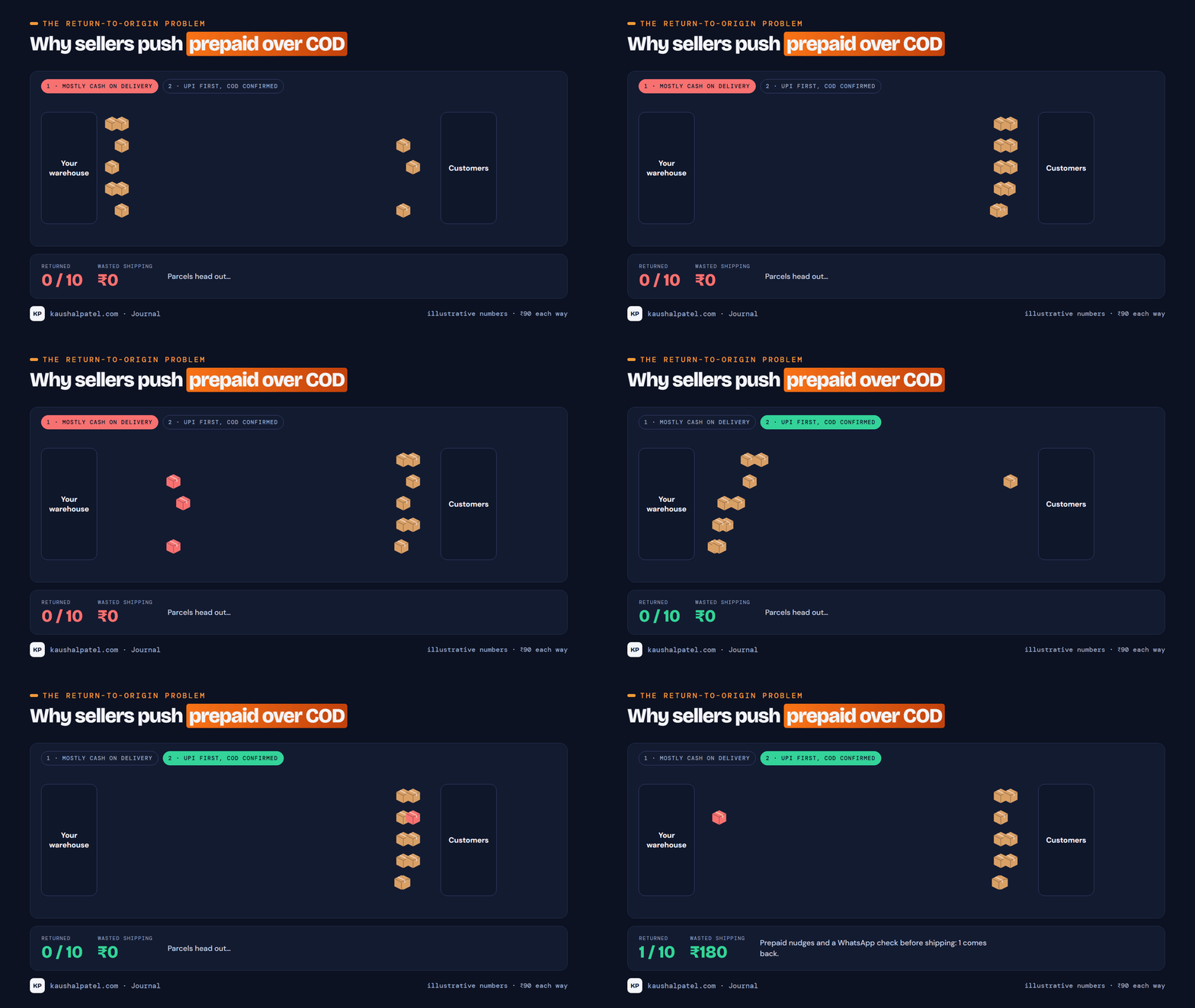
Cash on delivery won’t disappear soon (it builds trust with first-time buyers), but smart sellers are taming it: confirming COD orders on WhatsApp or by phone, checking addresses and PIN codes before shipping, limiting COD on high-risk orders, and rewarding prepaid payments.
As e-commerce grows, so does regulation. The key rules every Indian online seller should know about (this is a summary, not legal advice):
| Rule | What it means for sellers |
|---|---|
| Consumer Protection (E-Commerce) Rules, 2020 | Show seller details, the total price, return and refund policies, country of origin, and have a grievance officer for complaints. |
| Guidelines on dark patterns, 2023 | No false urgency, hidden charges, forced sign-ups, “confirm-shaming” or tricky subscriptions. The CCPA has listed 13 banned patterns. |
| Digital Personal Data Protection (DPDP) Act, 2023 | Collect only the personal data you need, get clear consent, protect it and delete it when you’re done. The rules were notified in November 2025 and phase in over about 18 months. |
| GST on e-commerce | Sellers on marketplaces generally need GST registration; marketplaces collect TCS (0.5% since July 2024) on sales they process. Price your products with tax in mind using a GST calculator. |
| FDI policy | Foreign-owned platforms can run marketplaces but not hold their own inventory to sell to consumers, which shapes how the big platforms work with sellers. |
Trust is also about security. Online stores are a favourite target for phishing, fake payment links and account takeovers; see cybersecurity threats everyone should know about and check your store’s HTTPS setup with the SSL certificate checker.
Cross-border e-commerce lets a weaver in Varanasi or a skincare brand in Surat sell to buyers in the US, UK and the Gulf. Marketplace export programmes, India Post’s Dak Ghar Niryat Kendras and simpler export paperwork are lowering the barrier. Handicrafts, textiles, ayurveda and wellness, jewellery and specialty foods are natural fits. The government has set an ambitious target for e-commerce exports by 2030, so expect more support here.
| Model | Examples | Best for | Watch out for |
|---|---|---|---|
| Marketplaces | Amazon, Flipkart, Meesho, Myntra, Nykaa | Reach and trust from day one | Commissions, ads, price wars, little customer data |
| Your own website (D2C) | Shopify, WooCommerce or a custom store | Margin, brand, repeat customers, data | You must bring your own traffic |
| Quick commerce | Blinkit, Zepto, Swiggy Instamart | Everyday and impulse products in cities | Small range, tight margins, in-app ad costs |
| Social and WhatsApp commerce | Instagram, WhatsApp Business, creators | Discovery, community, regional audiences | Hard to scale, manual operations |
| Open network | ONDC seller apps | Local shops and new channels at lower cost | Uneven buyer experience, still maturing |
Most growing brands use two or three of these together. A common pattern: a marketplace for reach, your own website for margin and loyalty, and social media for discovery. If you are deciding how to build your own store, what is a CMS, WordPress vs Wix and build vs buy will help you choose.
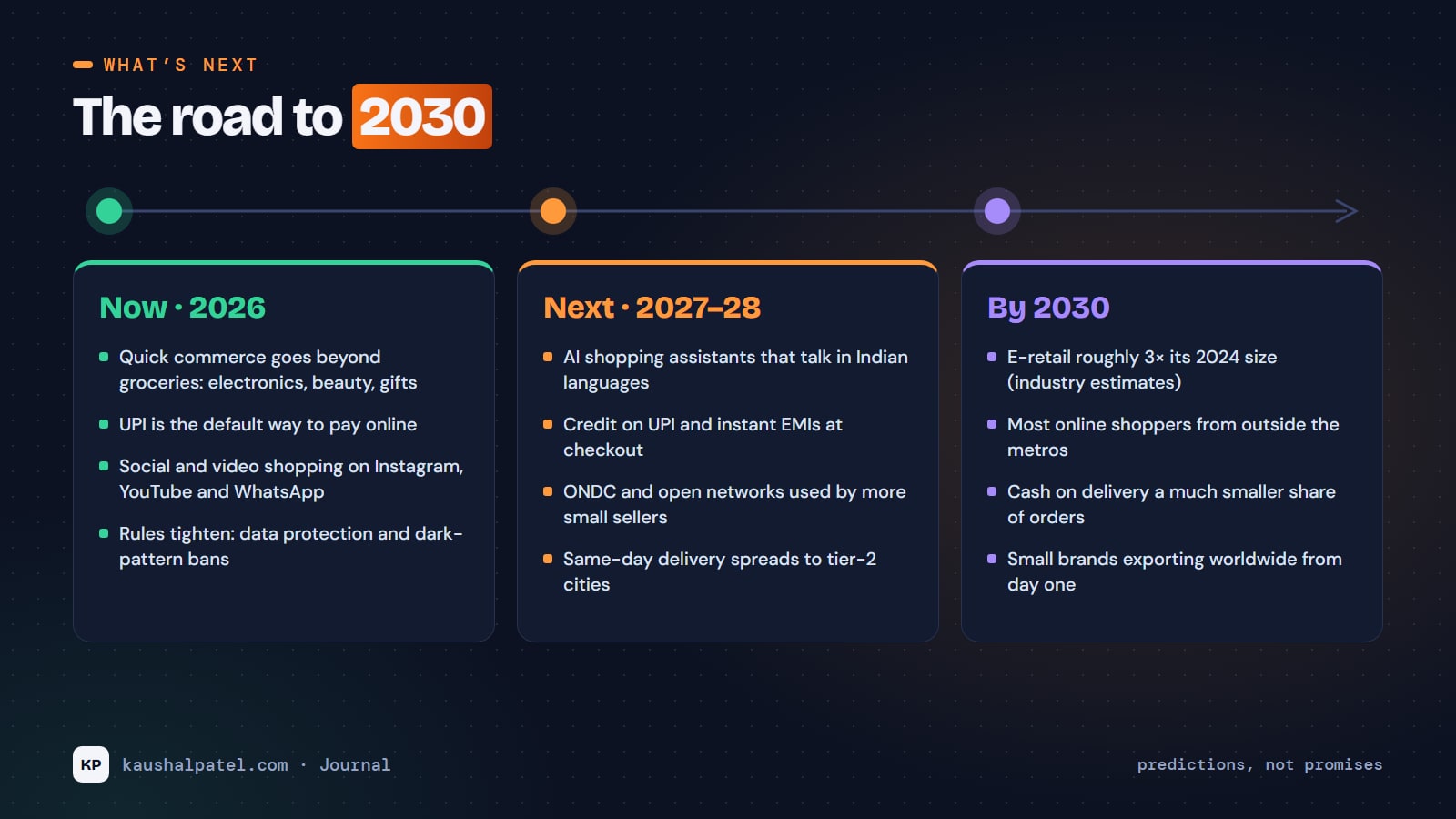
None of these will happen overnight, and some will move faster than others. But the direction is clear: more buyers from smaller towns, more prepaid and credit-based payments, faster delivery, more AI in every step, and more rules protecting consumers and their data.
| Challenge | Why it matters | What sellers can do |
|---|---|---|
| High returns and RTO | Wasted shipping and stock stuck in transit eat margins | Confirm COD orders, verify addresses, reward prepaid, show accurate sizing |
| Thin margins and ad costs | Commissions plus marketplace ads can wipe out profit | Know your real unit economics; grow your own channel and repeat buyers |
| Trust and fake sellers | First-time buyers fear being cheated | Real photos, clear policies, reviews, fast support, verified business details |
| Last-mile delivery in small towns | Slow or failed deliveries hurt ratings | Use courier aggregators, check PIN code coverage, set honest delivery dates |
| Discounting and cash burn | Price wars train customers to wait for sales | Compete on range, quality and service; plan sales calendar deliberately |
| Compliance | GST, consumer and data rules apply even to small sellers | Build compliant invoices, policies and consent flows from the start |
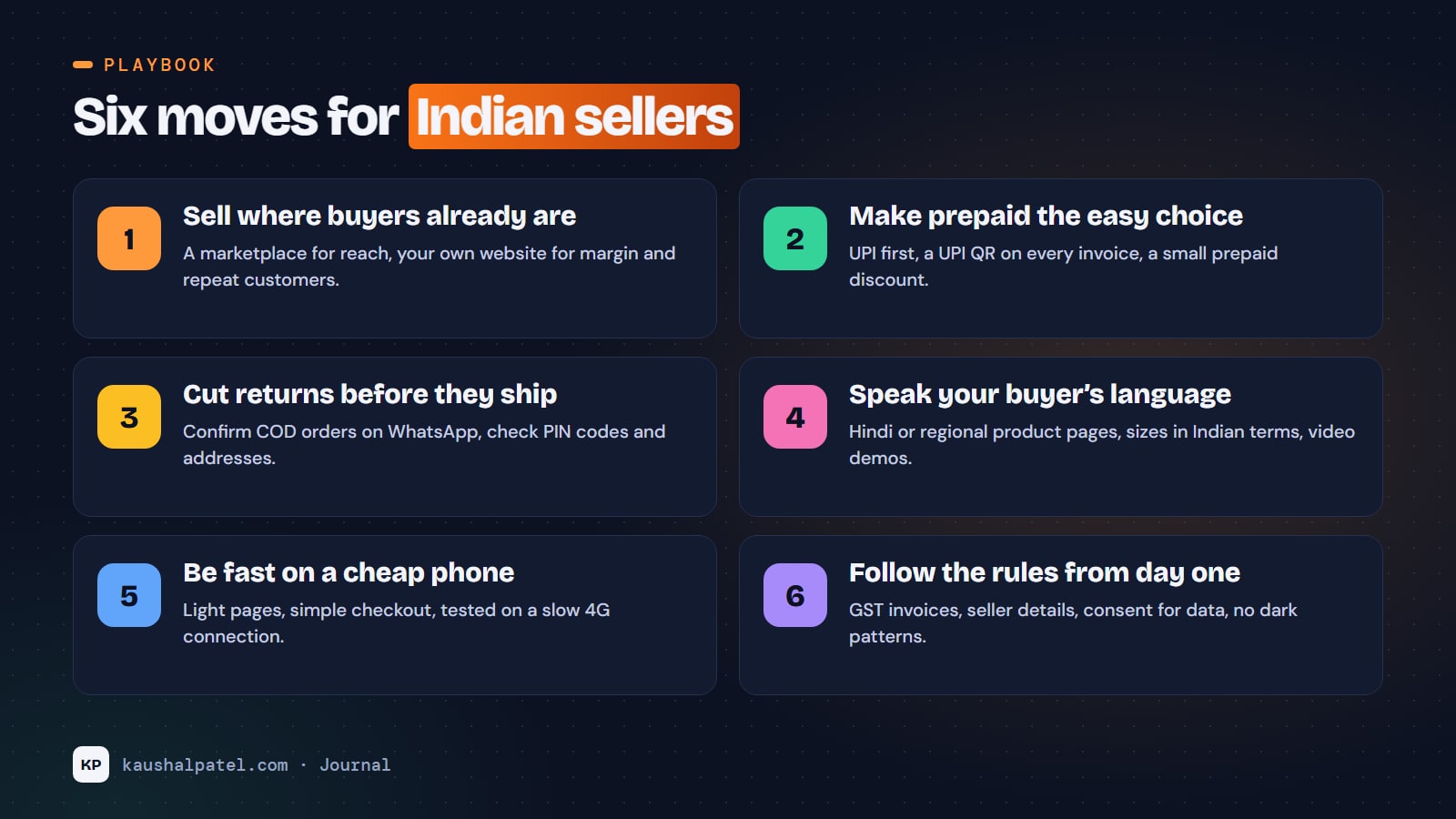
Strong, long-term growth. Industry estimates expect online retail to roughly triple between 2024 and 2030, driven by small-town shoppers, UPI, quick commerce, social commerce, AI in Indian languages and open networks like ONDC. Online is still a small share of total retail, so there is plenty of room to grow.
The biggest are: growth from tier-2 and tier-3 towns, UPI and credit on UPI replacing cash, quick commerce, social and video shopping, D2C brands with their own websites, AI shopping in Indian languages, faster delivery with fewer returns, and stronger consumer and data protection rules.
Yes, if you pick a focused niche and understand your unit economics. Starting is cheaper than ever, but competition and ad costs are high. Start small, validate demand (see how to build an MVP), sell where buyers already are, and build your own channel for repeat customers.
Not soon. COD is shrinking as UPI grows, but many first-time and small-town buyers still prefer it. Expect sellers to confirm COD orders, limit it on risky orders and reward prepaid payments, rather than drop COD entirely.
ONDC (Open Network for Digital Commerce) is a government-backed open network that lets sellers on one app be found by buyers on many apps. It can lower platform dependence and costs, especially for local businesses. It is still maturing, so treat it as an additional channel to test, not a replacement for your main one.
Generally, yes, if you sell goods through e-commerce marketplaces, though there are some exemptions (for example for certain small service providers and, under conditions, small intra-state sellers). Rules change, so check with a chartered accountant for your situation.
The future of e-commerce in India is mobile-first, UPI-powered, multilingual and increasingly local, and it will be built as much in Surat, Patna and Coimbatore as in Mumbai and Bengaluru. Technology is making it easier than ever to start; trust, operations and real customer understanding will decide who lasts.
Pick your channels deliberately, make paying and receiving easy, cut the waste from returns, speak your customers’ language and follow the rules. Do that consistently and the next wave of Indian online shoppers is yours to win.
Planning an online store, a D2C brand or a better checkout and want a second opinion, or someone to build it? Let’s talk. You can also browse more posts on marketing and business strategy.

Entrepreneur · Business Owner · IT Consultant — writing about startups, AI and building products.
Keep reading
How AI is changing digital marketing in 2026: AI search and GEO, content, personalisation, ads, analytics and chatbots, plus tools, risks and a 90-day plan.
16 min read15 free digital marketing tools every business should use in 2026: analytics, SEO, local search, social, design, email and CRM, plus a 30-day setup plan.
16 min readQuiet, written building in public: share architecture decisions, mistakes and real numbers to attract early adopters and talent, with an update builder.
10 min read